
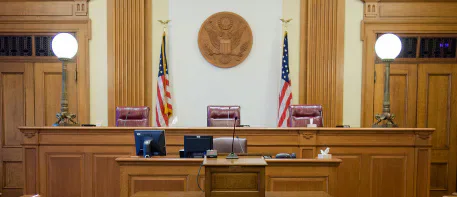
Is the state justified in determining who has the right to life and death? Is a jury of 12 citizens justified? Florida argues yes, recently expanding the crimes that will get you the death penalty to child sex abuse, inciting debates, and questions about the North American justice system.
Florida (a Republican state) passed a bill on the 18th of April allowing the death penalty to be served to convicted child sex abusers when the child is under 12 years old. Whatsmore, breaking from national legislation, the agreement does not have to be unanimous, eight people can now carry the majority. Florida has grappled with state sanctioned execution as recently as 2022 when Nikolas Cruz, perpetrator of the Parkland Shooting, was given life in prison rather than death when three jurors voted against it. Thus, this political decision can be seen to challenge and tackle what many saw as a miscarriage of justice.
Although Judicial executions are normally contentious, the Florida senate passed the bill with bipartisan support from lawmakers and co-sponsors, with only four opponents. Ron DeSantis, governor of Florida, has vocally supported this bill arguing convicted child sex abusers have repeatedly committed such a crime and will do so again. Historically, DeSantis has supported the death penalty, with this case stating, “the death penalty is the only appropriate punishment when you have situations like that”.
This calls into question the 2008 Supreme Court case; Kennedy V Louisiana, where the court ruled the death warrant couldn’t be served to criminals whose victim did not die. DeSantis has suggested the court could be open to another evaluation drawing upon its conservative placement and its recent judicial activism.
The death penalty in Florida, and 26 other states, does however exemplify a failure in the justice system. The use of judicial execution is discriminatory with the chances of being on death row being placed heavily upon race and class. From the 1970’s half the inmates on death row at any given time have been people of colour, signifying huge judicial omissions and unsolved bias. And race is not the only contingency. Most people on death row have low incomes and are unable to afford extraordinary and successful lawyers leading to their conviction by the court system.
It is equally untrue that the death penalty lowers rates of homicide, states without the penalty do not have larger amounts of killings. This means if using severe punishment to deter criminals, life in prison will be enough to accomplish this. It also costs taxpayers more, trials where state execution is considered, take longer and use up higher amounts of public funds.
Finally, explicit failures in the judicial system have taken place with people dying for a crime they did not commit. Troy Davis was executed in 2011 for a murder he was almost certainly innocent of. His sentencing was based on witnesses with no physical evidence. Seven out of nine testimonies changed and were contradictory with some saying they felt threatened by the police. The presence of wrongful judicially sanctioned deaths highlights the too large holes in a legal system that seeks to protect citizens and expect their trust. This is something that’s difficult when it has the power to do the exact opposite.