
The NHS is under immense strain—from record-breaking waiting lists to chronic staff shortages—and Wes Streeting, Labour’s Shadow Health Secretary, has vowed bold reforms to “fix” it. With 7.7 million patients in England awaiting hospital treatment (an all-time high reached in late 2023) and public satisfaction with the health service plunging to its lowest level since records began, expectations are high. Can cutting NHS bureaucracy, tweaking budgets, and leveraging the private sector really cure the NHS’s ills?
Workforce Cuts and Staffing Issues
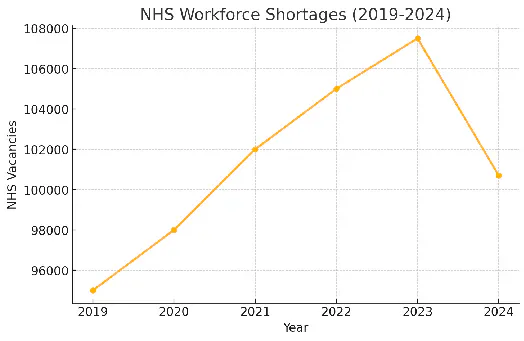
Streeting has signaled a shake-up of NHS management, planning to cut around 2,000 managerial jobs at NHS England—roughly 15% of central office roles—to redirect funds to frontline care. This is expected to free up about £325 million for hiring doctors and nurses. However, the NHS is already facing a workforce crisis, with over 100,700 unfilled posts, including 8,000 doctors and 31,000 nursing vacancies. England has only 2.9 doctors per 1,000 people, far below the OECD European average of 3.7.
Labour’s proposals include training 7,500 more doctors and 10,000 more nurses per year by expanding medical school places and apprenticeships, funded by abolishing the non-dom tax status. These measures could help over time, but with doctor training taking years, they will not provide immediate relief to struggling hospitals. Cutting 2,000 admin roles may offer some savings, but given the scale of NHS vacancies, its impact could be limited.
NHS Budget and Spending
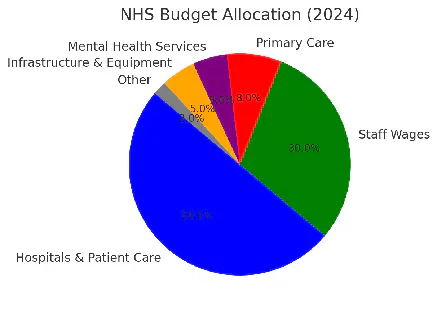
The Department of Health and Social Care budget for England in 2024/25 is about £192 billion, a mere £1.1 billion real-terms increase. Labour’s approach emphasises financial discipline over major spending increases. However, analysts project a £38 billion funding gap by 2030. The Health Foundation has warned that sustained 4% annual real-terms growth is necessary to tackle backlogs and improve services, a level neither Labour nor the Conservatives have pledged.
While the NHS remains efficient relative to spending, years of underfunding have left little flexibility for improvements.
Waiting Times and Healthcare Access
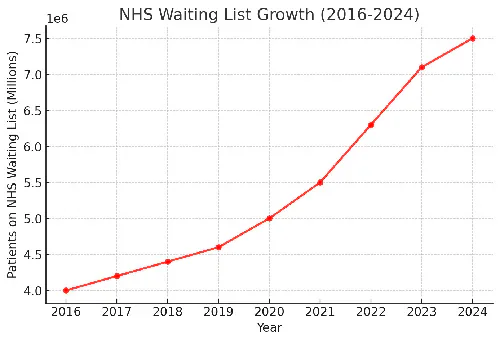
With 7.5 million people on NHS waiting lists and A&E delays worsening, Streeting has set an ambitious goal: eliminate waits over eighteen weeks within five years. Labour plans to deliver 40,000 extra appointments per week by extending GP and hospital clinic hours and doubling the amount of diagnostic equipment. Additionally, they propose utilising private hospitals to clear NHS backlogs.
Past NHS initiatives have shown that outsourcing routine surgeries to private clinics can help reduce wait times. However, concerns remain about workforce shortages—as NHS consultants often work in both sectors, diverting patients to private providers risks depleting NHS staff availability. Reducing backlogs requires a long-term increase in treatment capacity rather than short-term fixes.
Privatisation and Public Sentiment
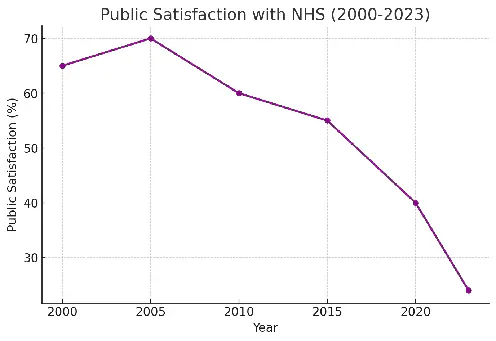
Streeting’s openness to using private hospitals has raised concerns about creeping privatisation. However, polls show that public dissatisfaction with the NHS is rooted in long waits and staff shortages, not a rejection of the NHS model. The 2023 British Social Attitudes survey found that 52% of the public were dissatisfied, but a majority still support the NHS being free at the point of use and tax-funded.
Historically, outsourcing NHS treatments has had mixed results. While it helped reduce wait times in the 2000s, it also led to concerns about long-term impacts on public-sector capacity. If Labour’s approach is perceived as expanding private-sector reliance, it could face public and political pushback.
A Promising Plan, but is It Enough?
Streeting’s proposals address key NHS issues: staff shortages, waiting lists, and financial inefficiencies. His plan to train more doctors, expand appointment capacity, and use private clinics could yield short-term improvements. However, the underlying funding gap and workforce shortages remain significant barriers.
Without sustained investment and long-term workforce expansion, Streeting’s approach may only provide incremental relief rather than a full-scale NHS recovery. Fixing the NHS requires more than efficiency savings—it demands significant resources and a strategic commitment to long-term capacity building. The coming years will test whether these reforms can reverse declining NHS performance or if deeper structural changes will be necessary.