
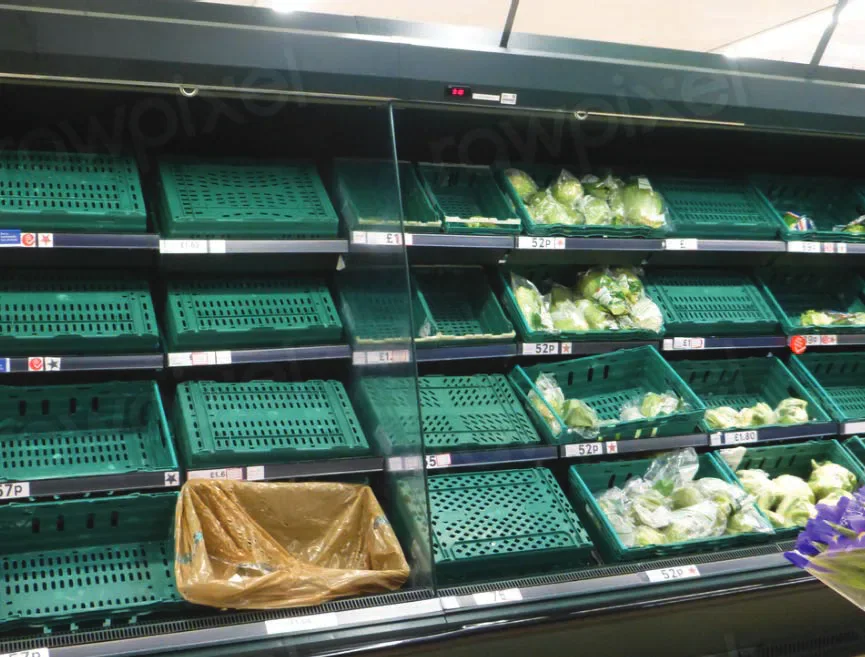
The UK is facing food shortages following record amounts of rainfall this year. Farmers all across the country have been unable to plant many essential crops, particularly potatoes and wheat, due to the poor ground conditions. Despite the UK being generally very well accustomed to rainfall, the Met Office reported that the last 18 months have seen an astonishing volume of 1,695 mm rainfall—which is the highest volume to ever be recorded since the organisation began recording data in 1836. There have also been extremely poor weather conditions in nearby countries, where very similar wet conditions have affected the agricultural sector in much of Europe.
Th is subsequently means there’s also less food available to import, leading to a reduced supply in supermarkets. Economists are concerned that this will drive the prices of food up all over the country, making it unaffordable for many families to buy basic food necessities. The effects of this are already being recorded, with a major retailer reporting that the wholesale price of potatoes was up 60%.
The National Farmers’ Union (NFU) also warned that the combination of increased rainfall and low temperatures has been affecting the livestock market as well. The muddy conditions mean farmers are having to provide supplementary feed in order to compensate for the lack of grazing opportunities, and the price of meat is also being driven up by the poor climate conditions.
As the consequences of climate change continue to amplify, this raises concerns around the future of the agricultural sector in the UK and Europe.”
As the consequences of climate change continue to amplify, this raises concerns around the future of the agricultural sector in the UK and Europe. It is important that the economy is able to adjust and adapt to these changes, creating new solutions to help build a more resilient food system and ensure food security for future generations.