
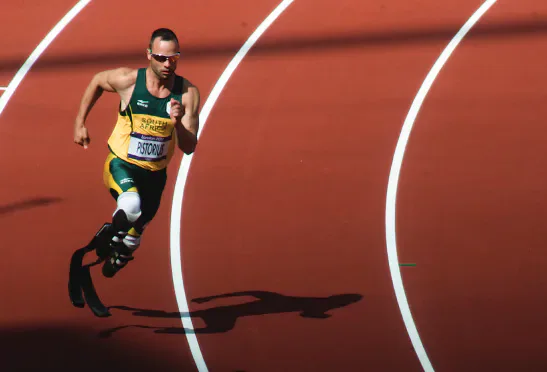
The defamed 37-year-old South African Paralympian, once known as the “Blade Runner,” has recently been released from Atteridgeville Correctional Centre on parole after serving 11 years for the manslaughter of Reeva Steenkamp. In their home in Pretoria on Valentine’s Day 2013, 29-year-old Reeva Steenkamp died in her bathroom after multiple bullet wounds were shot through the door by her boyfriend Oscar Pistorius. The murder shocked the world, just a year after the London 2012 Olympics in which Pistorius shone as a role model for disability in sports after being the first double amputee to compete in an Olympic event.
The former Paralympian has maintained his story in court and throughout the last years, that he had mistaken Steenkamp for a burglar. Despite this, investigations uncovered that she had fled to the bathroom after a row and the shooting was premeditated. The following year, in 2014 after a series of heavy trials with intense coverage by global media, Pistorius was convicted of murder and sentenced to 13 years and 9 months in prison.
He was released on house arrest on appeal in 2015 and eventually sent back to prison in 2016. Now at the age of 37, Pistorius has been released on parole decided by the South African Constitutional Court, with a set of conditions, including a five-year conditional period lasting until December 2029 after serving the minimum term of his parole petition. Within the last month in an exclusive interview given to Good Morning Britain, Reeva’s Mother, June Steenkamp highlighted the emotional toll that the tragic death and the case has had on her family.
With the death of her late husband, Reeva’s father passed away in September, months after Pistorius was deemed eligible for parole. Despite an acknowledgement in the “inevitability” of his release, Mrs Steenkamp said that she will never come to terms with the narrative Pistorius presented and continues to maintain surrounding the death of her daughter. When the verdict was originally released, it sparked conversations by advocates for women’s rights and anti-violence groups that more needed to be done to stop domestic violence and that the death of Reeva was not done justice by the sentence given to Pistorius.
Controversially it was also flagged up that the Paralympian was given a lesser sentence due to his athlete status and disability. The South Africa’s Department of Correctional Services (DCS) have assigned Pistorius with a monitoring official to oversee his activities, job opportunities, and residential changes. The requirements also include attendance at gender-based violence programs and ongoing sessions on anger management, as confirmed by the Steenkamp family lawyer to ensure further rehabilitation.
With his release, questions have been raised to whether this is a setback for women’s rights and campaigns against domestic violence. South Africa has one of the world’s highest levels of violence against women globally and the announcement of parole being granted was ironically given a day before the International Day for the Elimination of Violence against Women. In forgiving Oscar Pistorius, June Steenkamp hopes that he has taken his time in prison to undergo rehabilitation and show some remorse, but claims this has not been the case with Pistorius maintaining his version of events and not succumbing to the circumstances.
Oscar Pistorius will now reside at his uncle’s mansion in a suburb in Pretoria with maximum security.