
Trigger Warning: This article contains sensitive material that some may find distressing (self harm and suicide).
Our prisons are failing. The system postures as a palace of rehabilitation. The reality is a lethal combination of understaffing and poor access to mental health support for prisoners.
Statistics can help us understand the scale, but only the personal and human cost will convey the need for real change. For Mary, the cost was her husband, Peter (real names changed). So, how is the system failing, how did it fail Peter and what should be implemented to turn our prisons from modern asylums to places of rehabilitation?
Ignorance of the crisis or inability to act? Either way, HM Prison service is crumbling under the pressure. The Prison Advice Trust has found that ‘Poor mental health is the norm, not the exception’ among prisoners.
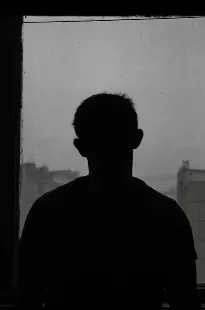
This reality is compounded by the HMIP (inspectors of prison standards) annual report 23/24 which found ‘worrying gaps’ in mental health services. These disastrous mental health conditions in prisons can be directly linked back to nearly a decade and a half of austerity, which targeted prisons and led to understaffing and an inability to deliver justice. Within 4 years of the Coalition Government being elected in 2010, the number of prison officers fell by 5,000.
Former director-general of HM Prison Service (Phil Wheatley) did not mince his words when he stated, “As staff numbers declined... self-harm and suicide began to rise.” The current number of prison officers still hasn’t returned to 2010 levels. This is a stain on our justice system. Without proper staffing levels, the prison service will continue to fail in completely delivering its duty of care.
In at least 2 prisons in the UK, mental health support is not available at all and in least 3, the wait for support is ‘excessive’. How can we expect prisoners to be rehabilitated or safely return to society if their mental health is not properly addressed while in the government’s care? For Mary, this is not an academic question to be studied or a policy question to be debated, this was a defining tragedy of her life.
Terminal failure of officers to act, officer inexperience and rigid mental health processes led to the death of her husband, Peter. Mary and Peter’s story is not one of rehabilitation, but a result of systemic neglect. When Peter entered the prison system, he was an alleged first-time offender with no experience of the system that now had total control over his life.
After his arrest and once he’d been put on remand, Mary stated that, “he didn’t really know what was going on” as he was being processed and that, for the family it was very difficult to get information about how he was inside. To begin with, he attempted to engage with staff by asking about programmes to keep him busy. However, when he asked this, the prison staff laughed in his face.
Following an assault by another prisoner, Peter and his family began to push for greater mental health support. However, Mary found that the system lacked any sort of flexibility for him to properly access support and once he was moved to a Vulnerable Prisoners Unit (VPU), Peter’s family were shocked to find there was not fewer prisoners, nor better mental health support for a unit specially dedicated to those who are vulnerable. Less than 6 months after Petet’s ACCT was closed, the planning process put in place for prisoners at risk of suicide, Peter took his own life.
This was the culmination of a system that kept families in the dark on what was being done to support Peter
This was after he had not been checked for at least 3 hours during the day (missing breakfast and his medication), as officers, who were inexperienced on that wing had been allocated to the VPU. This was the culmination of a system that kept families in the dark on what was being done to support Peter. A system that lacked clear lines of communication for concerns.
A system that laughed in the face of a man who was just doing what he could to productively serve his time. Peter’s death must be a call to action. As Mary states, “without funding, change is impossible”.
This is echoed by the University of Bristol, who call for investment into improving living conditions, over providing more places. Mary knows there are “good people” in the system, but through mental health training for officers and a review of the ACCT system, we can deliver a “first line of defence” against suicide in prisons. Our prisons are meant to rehabilitate, not traumatise.
Until those on the front lines receive proper training and funding, prisons are failing to deliver their duty of care. They are failing to deliver rehabilitation. They are failing to deliver justice.
If you require support, you can find it here: In the UK and Ireland, Samaritans can be contacted on freephone 116 123, or email jo@samaritans.org, jo@samaritans.ie or https://www.samaritans.org/how-we-can-help/contact-samaritan/
Details on support from Cardiff University can be found here: https://www.cardiff.ac.uk/study/student-life/student-support/counselling-and-wellbeing