
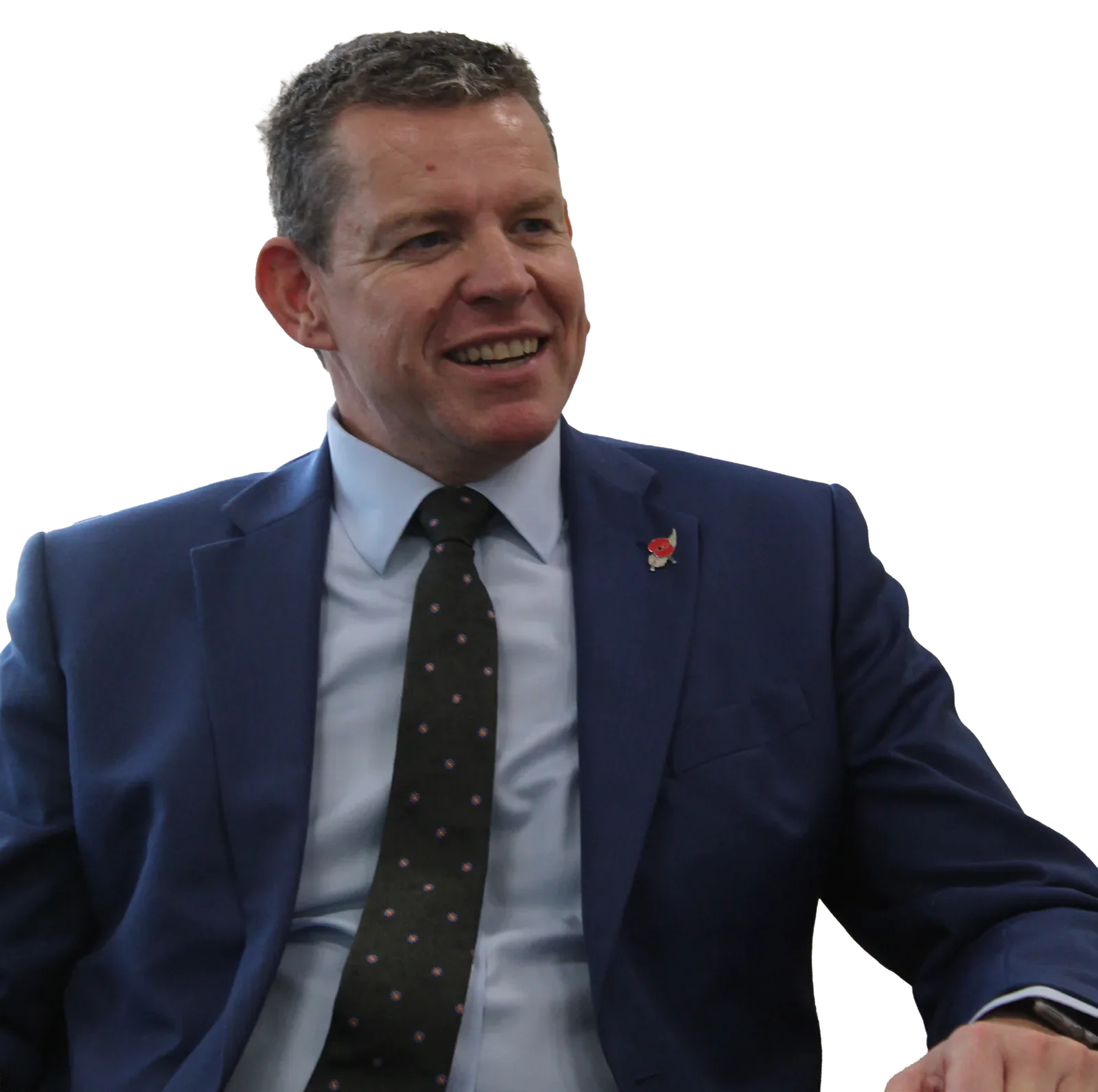
For those who don’t know lot about you, could you tell us about yourself and why you ended up in politics?
I’m a journalist by profession. I still consider myself in a way to be a journalist that ended up in politics. I come from Ynys Mons, the Isle of Anglesey, though I was born outside Cardiff in Pontypridd. I came to study Welsh and Politics at Cardiff University with a view to going into journalism, and that’s what I was fortunate enough to do for nearly twenty years, working mainly for the BBC as a political reporter and news reader and presenter, and I had the most wonderful and privileged career. But I guess I’d always been surrounded by politics in my personal life, expressed through my parents, and then studying politics in Cardiff. I was always in and around politics and always had strong views of my own. Ultimately, I came to the point in 2013 when a by-election was called where I lived and I had the opportunity—should I have wanted to take it—to stand in that by-election, which meant I didn’t have to give up my career as a journalist years before an election—that kind of thing. I think it was partially driven by the loss of my mother a few months previously, which was the kind of experience that makes you think differently about life. I decided that this is an opportunity I had to take to try to contribute towards building the Welsh nation. That’s what I did, and here I am now.
A lot of people talk about the possibility of putting a divided border between Wales and England, maybe splitting some communities apart. Do you recognise that that might be a concern for people in those parts of the world?
Oh, absolutely. You have to recognise that people have lots of concerns and questions that are unanswered in their minds about what independence would look like. I’ll say at the outset, we’re going to an election next year, which isn’t an election about independence. There’s no referendum being put on the table by us now, but absolutely, I want to lead the debate on where we could go as a nation, get people interested in whether there’s a different and better way of running things for Wales. Should we always be a nation that is stagnant economically, with families locked in poverty, a third of children living in poverty? Or are there ways at looking at the way independent nations work around the world that could allow us to map things better, redesigning Britain? And in that debate, yes, there are lots of issues. What happens around the border? What happens to our currency? What happens to our ability to trade with other nations? It’s healthy that people ask those questions, and we must be ready and able to answer those questions. On splitting communities: of course, communities wouldn’t be split. I’m an internationalist, I’m a European, and all around Europe, you see nations that are very distinct and independent, but whose borders are very, very permeable and porous, and where people live in one country and work in another, live in one country, receive health services in another, and so on. I have no doubt in my mind that a very strong and positive relationship between Wales and other independent nations within these islands would just mean a new relationship, and in many ways, I think us being independents, could bring us up closer together as nations with our own distinct histories and futures and common ground.
For those who you’ve said might be “indiecurious”, but nervous about the practicalities of independence, how would you reassure them?
It’s in being willing and able to ask the difficult questions, facing up to the challenges that would inevitably exist in any period of transition, and focusing on what the opportunities would be. People tend to focus on the negatives if they’re not convinced yet. “What about the risk of losing the comfort blanket that we have in the UK? Now things aren’t perfect, but at least we have the backing of being in the UK.” I’d say in the debate on looking for a different kind of potential for our nation, you have to turn it on its head and ask, well, the problems that we have now, the endemic poverty, and the economic stagnation, they are with Wales being part of the UK. It is as part of the UK that we are underperforming economically. It is as part of the UK that we have children that are marked out very early in their lives as to what their opportunities could be. So, I’d ask people: why would they want to—without considering another option— lock themselves and their families and their communities and their nation in that kind of relationship that hasn’t been working particularly well for us?
You have described Brexit as socially and economically divisive. People might legitimately see the parallels between that and the transition to independence.
People will often ask: “You want Wales to be independent, so you want that sort of independence, but you want to be part of something else. Isn’t Welsh independence just the same as Brexit? Isn’t it breaking away from something?” I’d say it’s the complete opposite, because Brexit was driven by a desire somehow for the UK to be independent. Well, I’m sorry, by any rational measure, the UK was already independent. As is France, as is Germany; these are independent nations, but who’ve decided to go into a union that worked pretty well. I’m not interested in Wales being an isolated or separate country. I’m interested in Wales building something new. Brexit was about breaking something up. Independence for Wales is about building something new, and an independent Wales is always from the get-go about how we build the closest relationships we can within another union. So, I would be very happy being part of a British union within a European Union. I’m not seeking that separatism. I’m seeking building something new.
As a Cardiff University graduate, how would you address people’s worries about Welsh student graduates and the academic ties that might be lost between Wales and the rest of the UK, when the graduate market is particularly quite bad in Wales, especially outside of the big cities like Cardiff?
I have no doubt that we could build on our longstanding tradition that has been undermined, as part of the UK, in our higher education sectors. We have a very proud history in Wales of excellent universities that have felt the ravages of policy that have undermined them in recent years. I would want Wales to be a centre of excellence in higher education that is recognised and would absolutely be able to attract our students in. But I also make no secret of my desire to have more students in Wales choose to stay in Wales—not forced to stay in Wales, but choose to stay in Wales— and build lives for themselves that contribute towards the prosperity of our nation. That is something that just is not on the radar of government in Wales currently, where the model that we have for higher education essentially says that Welsh government doesn’t care whether our young people stay in Wales or not. “It’s totally up to them; they can do what they want.” There is no other country anywhere that does that. How can a country prosper if it doesn’t mind losing its talent?
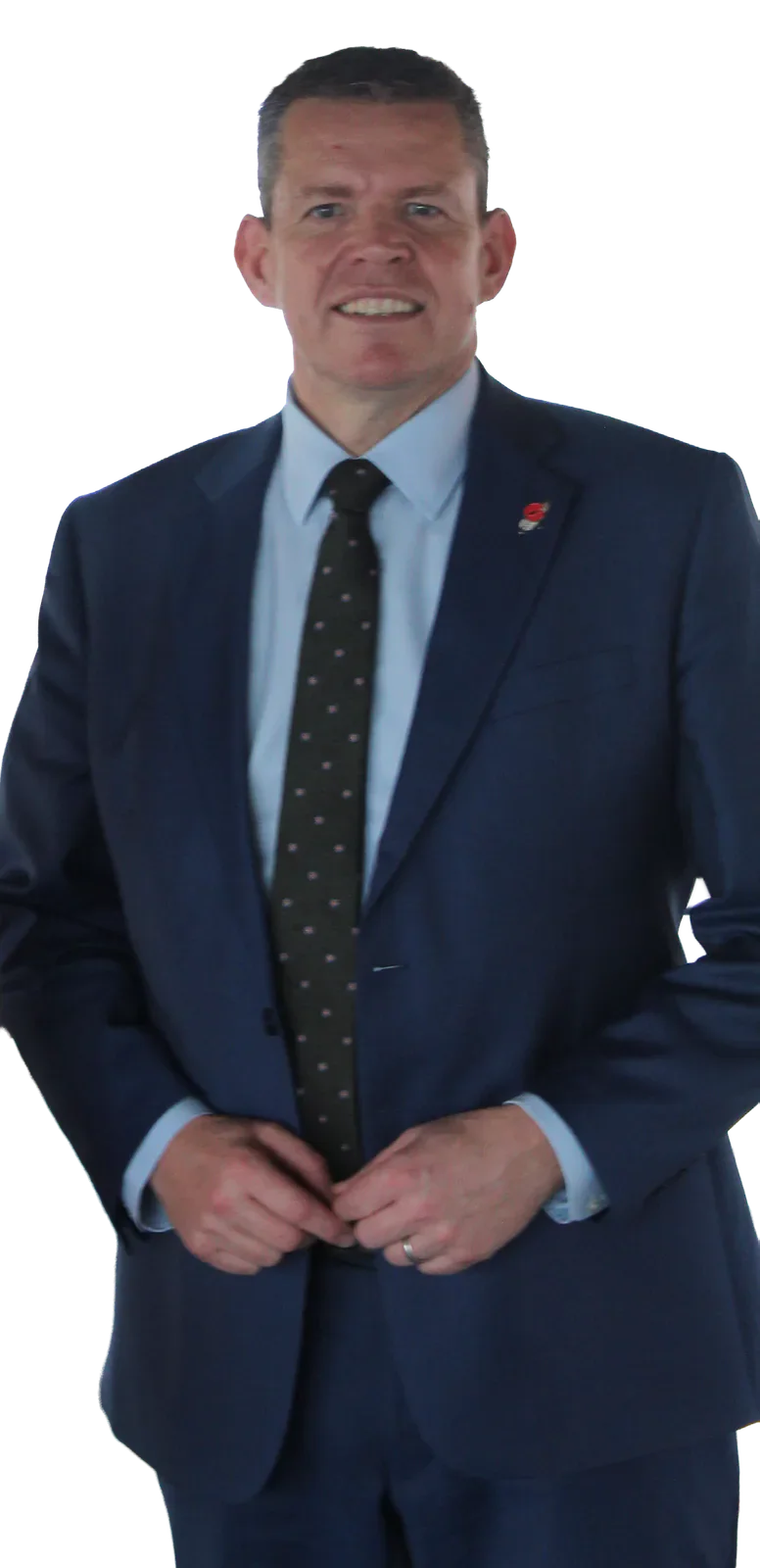
Plaid Cymru has gained lots of support from young people. How would you inspire hope and well-founded optimism in the young people of Wales?
Well, to be honest with you, I think we must be doing something right currently, given the polls that are suggesting that young people, in both the youngest age groups, 16 to 24, and 24 to early 30s are backing Plaid Cymru in very, very significant numbers. I’d like to think that we’ve built that by showing and acting in a way that means we’re a listening party, that we take young people seriously. Our own young people’s organisation, Plaid Ifanc, is very important to us. We put a lot of work into making sure that at least parts of our social media really, really speak to young people. A lot of it was generated by young people. The best people to influence young people is other young people. It’s about building that critical mass of people who are excited about our prospects for doing things differently in Wales, for being brave enough and confident enough to take our own future into our own hands with a government led by a party made in Wales that’s focused on the interests of Wales. Young people seem to be currently promoting that momentum themselves. Now, I want to do everything that I can as party leader, through policy, showing that we’re supporting young people, supporting young families, to show that we’re a party of the future in Wales, and young people clearly are our future. It’s a good relationship we have with young people; I will do everything that I can to maintain that.
Young people are particularly concerned about climate issues, and, unfortunately, a lot of nations are falling behind on their commitments. How do you plan to actualise an image of a green Wales and what sort of policies would you put in place?
I often remind people that the first green MP in the UK was a Plaid Cymru Green MP, back in the early ’90s. We have always been intrinsically linked as a party with environmental campaigns and campaigners, showing that we’re serious about innovating for the future. Now, innovating is about innovating for climate justice. We know what the challenges are that we face and Plaid Cymru has always been very serious in acknowledging that we face a climate emergency. We tabled the motion calling for a climate emergency to be called in Wales because it was the right thing to do. But it’s got to be backed up by all those elements of describing how we go through that just transition to make sure that we in Wales play our bit. And sometimes the criticism by people who still don’t believe in climate change or who are dubious about the chances to address our climate challenges is that Wales is very small, so it doesn't matter what we do: “We could go completely net zero today and it wouldn’t make a slight bit of difference.” As an internationalist Welshman, I will always believe that every one of us—as communities, as small nations—has a part to play, and Plaid Cymru has been very clear on that. And then you have policies on making sure that we drive jobs in the green economy. I think back to Leanne Wood’s “Greenprint for the Valleys” published years ago, showing how jobs could be created in areas that were suffering from post-industrial decline and could really be to the benefit of Wales. We also talk about community justice within the climate agenda, because we need to bring people with us, and we have to make sure that we appreciate and respond to community concerns about industrialisation of our landscape, for example. That’s something that we’re very serious about. A good example is in my constituency, where there are huge plans for solar farms. The Tories say “let’s not have any solar”. And I say, well, no, solar is great, but let’s do it in a way that works within our communities—for example, more dispersed models, and so on, which takes a little bit more innovation. So, Plaid Cymru is really serious about this, and mapping that out between now and next May is going to be a big part of our election pitch.
And if you’re to be successful in May, the size of the Plaid bloc in the Senedd and representation across Wales is going to grow massively. How are you going to ensure in that scenario that good governance stays a key principle, and what does that look like to you?
We’re at that point now, six months and two days away from the election, and it really is all now about making sure that we are ready for government. We have, if you like, a number of things we have to do alongside each other: going out and persuading people and talking to people and generating momentum behind our campaign. Caerphilly was very useful in that, but, alongside, it’s preparing for government. And in all those excellent people who stepped forward to be Plaid Cymru candidates throughout Wales, I’ve tried to instil in them the seriousness of what we are trying to achieve here. I’ve been really impressed with the kinds of people—really diverse people: from doctors, to those in education, to very young people, to more mature people. There’s a real spread there. But it’s all about everybody who’s a part of that team—or that prospective team—for Plaid Cymru, and out of them, of course, Welsh government, and understanding that we are here to do a serious job. Nothing could be more focused on that, in my mind, currently.
If you had any general piece of advice for young people, particularly young politicians, what would you say would be the most important thing about understanding politics or even understanding Wales?
I think an interest in politics always stems from an interest in your community, an interest in what it is that’s perhaps holding us back. I would urge young people who have views on how things are done to promote public services, to promote your community, to promote peace. It might be international affairs that drives them to really get involved. I would urge them to look at Plaid Cymru. I try to be honest with young people in saying that don’t always look for the party where you absolutely agree 100% with everything that they say and do. But find a party that you think represents your values, represents your views of where you’d like your country, your community to go. We are a democratic party. I’d urged people to get involved and to make their voice heard, and through a democratic party like Plaid Cymru, that can happen. There’s a young guy now who came on my radar a few months ago, started showing an interest in politics, stood in a community council election. I think he didn’t win. He’s studying politics, and now he’s put himself forward to be one of the names on the Plaid Cymru community list going to next May, because he’s passionate about doing things for Wales and for his community. That really excites me, and I want to encourage more and more young people to get involved—and hopefully get involved through Plaid.