
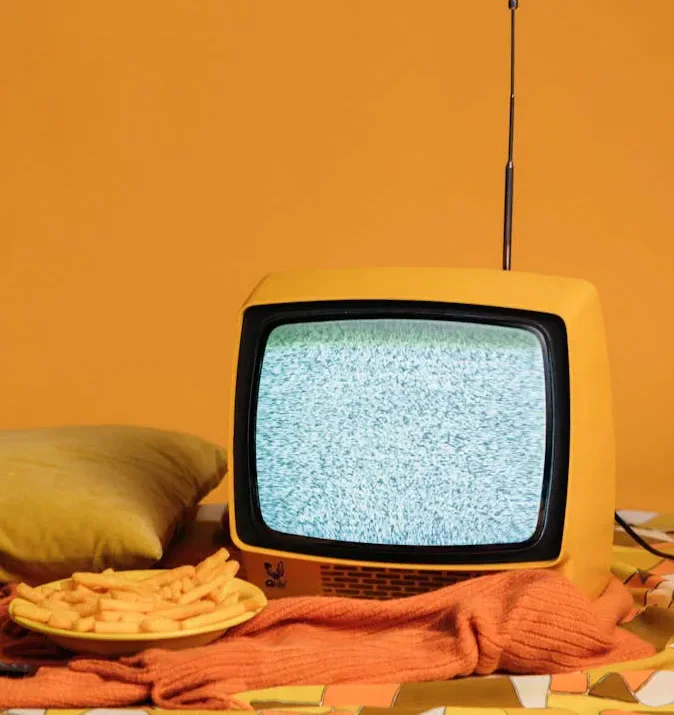
There are several things that I and most other people dislike or even hate about life in Britain: the winters, the cost of living, bad landlords, the broken politics. On and on I can go, probably enough to fill this newspaper, and thoroughly ruin the mood of anyone who might be reading it. Bearing this in mind, I want to focus on one particular gripe of mine that has re-surfaced lately, namely the TV Licence, or “Telly Tax” as it is colloquially (and more accurately) known.
If, like me, you live in student housing you have probably received some of TV Licensing’s deceptive and threatening letters. Often written in red, these threat letters promise action—or retribution depending on how you look at it—for nonpayment of the TV License. This tax, always referred to as a levy on BBC broadcasts, pays for the upkeep of the aforementioned organisation.
This was of course where the disgraced Huw Edwards was drawing his salary from, even after being charged with serious offences. That aside, I wish to ask the same two questions most of us are asking nowadays: firstly, why should we be compelled by the antiquated Communications Act (2003) to pay for the BBC even if we watch a livestream on YouTube? And secondly, why is TV Licensing allowed to act in such an aggressive manner towards the public?
It seems ridiculous that in a digital download age, where the consumer has arguably been empowered like never before, that the public should be compelled to pay for the lumbering and uninnovative mass that is the BBC. Why, merely for watching a live football match on Sky, Amazon Prime or ITV, should we have to fund Eastenders, Doctors, or Call the Midwife? I wrote last year about how the quality of the BBC’s history output has been on the decline for some time.
It could be argued that the same decline has taken hold of most of its other departments. Its news output, especially its political coverage, shows a lack of vitality and edge. They repeat the same format of jovial and complaisant discussion, as if Robin Day is interviewing Harold Wilson.
Ask yourself, have you ever seen a BBC reporter ask Keir Starmer or Boris Johnson to give a clear answer to a question, rather than settling for a half-cooked excuse? Perhaps once or twice, but nowhere nearly as much as they should. Likewise, the organisation’s entertainment output is underwhelming; especially its comedy, which has not birthed anything of note since This Country stopped airing.
At the same time the BBC refuses to broadcast classics like Monty Python. Beyond the state of the BBC, the moral indefensibility of the tax grows by the year, people of our generation dip in and out of the BBC like any other service, so it seems bizarre that it should be given a legally protected superiority over all other media. It is this legal protection which empowers the BBC through Capita (a private company who run TV Licensing) to sow fear in the public.
You’ve probably seen at least some of this, ranging from letters informing that licensing officers “have been authorised to visit the property”, all the way up to doorstep confrontations and court action. YouTube has given some exposure to the aggressive tactics of licensing officials, and the BBC does not pursue nonpayment in the same way as it did before. Nonetheless, around 30,000 people are prosecuted every year for nonpayment.
Typically, the poorest and most vulnerable of society. Foreign students are also a helpful source of revenue, as their lack of knowledge on the law means they normally pay up when faced with a threat letter. TV licensing’s website is arguably as misleading as its letters, and employs the broadest interpretation of the law as to make the watching of YouTube on a mobile phone part of its remit.
The BBC and wider media have covered the aggressive tactics employed by utility companies in the past. Ignoring the obvious self-interest at play, why isn’t the same scrutiny applied to Capita? Lisa Nandy has spoken of wanting to review the funding structures of the BBC as its charter comes up for renewal.
I have little hope that change as most people want will occur. The BBC is a useful tool for the government to establish and re-enforce the current social and political paradigm, and is therefore unlikely to be significantly undermined. In which case the anachronistic TV Licence will go on collecting tithes like a feudal lord, and adding further annoyance to our lives.