
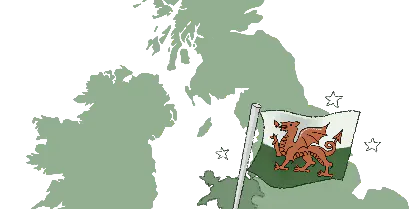
Despite nearly 500 years of English rule in Wales, independence seems an unpopular idea. A YouGov poll in September found just 20% of respondents in favour of an independent Wales.
To put that into perspective, in September 49% of Scots in a Norstat poll believed in an independent Scotland; and in May just over 35% in Northern Ireland favoured a United Ireland.
While Plaid Cymru, Wales’ nationalist party, controls the Welsh Government, they have ruled out an independence referendum within a first term. So, if it isn’t an independence movement, what on earth is Welsh Nationalism, and what does it mean for Welsh Politics today?
264 years before Ireland was placed under the control of English parliament; 171 years before Scotland; and 490 years ago for us, in 1536 the nation of Wales was brought under English law. In fact, until 1967 Wales was legally English, the legal region that included Wales was named for England.
How was this slight resolved? In 1967, the region was renamed to England and Wales, and the laws remained unchanged. The cause of Welsh Nationalism has been defined by disasters. Tragedies and injuries are imposed from Westminster, through a lack of care, forethought, and accountability.
The suppression of the Welsh language, for example, as an indirect result of Westminster education rules. The flooding of Capel Celyn, a Welsh-speaking community, in order to supply water for Liverpool. Permission for the plan was passed through Parliament without a single vote from Wales’ 36 MPs. The Aberfan disaster, the tragic deaths of 144 people, 116 of whom were children, after the collapse of a coal mining waste tip onto a school.
After an enquiry the blame was found to fall upon the National Coal Board, headquartered in London, nobody was charged. Welsh Nationalism calls for the power to make the sort of decisions that lead these tragedies to rest, not in the hands of English MPs in Westminster, but with Welsh representatives here in Wales. It is the movement to put the voice of the Welsh people in the ear of those who govern Wales.
In many ways, it has been successful. With the election of Plaid Cymru, Welsh Nationalism has surely triumphed, right? Well, the truth is that Plaid’s election success was not solely a result of the party’s nationalism, but rather a response to the nation’s rejection of the English nationalist Reform party.
The nature of Plaid’s victory was complex, suffice to say that support coalesced around Plaid because they were neither the anti-immigrant Reform party, nor the stagnating Welsh Labour Party; rather than because Welsh Nationalist issues had suddenly leapt to the forefront of voter’s concerns.
Wales’ lack of passion for independence (comparative to say, Scotland) is a result of the nature of Welsh nationalism. A movement defined by English negligence, rather than aggression. The last major war over Scottish freedom in the 1700s was fought by wigged men with rifles. The last Welsh revolt was led by Owain Glyndŵr, whom the English accused of wizardry, in the 1400s.
The primary concern is not separation, but self-determination. Dreams of independence are for now, dreams, even fervent nationalists will admit that the economic reality of an independent Welsh nation would be poor.
The focus becomes laying the groundwork for improving outcomes here in Wales, reducing poverty, improving education, and Welsh language expansion.
Welsh Nationalism is, today, the movement to make decisions for Wales in Wales. In the first term of the Plaid government, this movement faces its most serious challenge. Only time will tell if the Welsh people will vote nationalist a second time.