
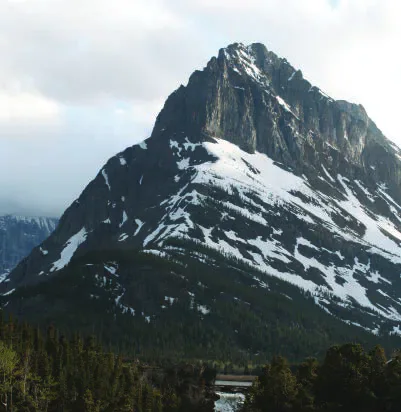
Mount Erebus is the highest active volcano in Antarctica, and the southernmost active volcano on Earth. Its activity is characterised as strombolian eruptions meaning that it regularly emits plumes of gas and steam, and occasionally molten lava bombs burst from the lava lakes. Recently, it’s been reported that the amount of crystallised gold that the volcano spews is of around 80 grams of gold a day – valued at around ,000.
However, this doesn’t mean you should run with a bucket to Mount Erebus - getting a hold of it isn’t as easy as it may seem.
Due to its unusual type of lava, the volcanic rock that forms from the magma has a specific type of chemistry. Volcanologist Tamsin Mather, professor of Earth Sciences at the University of Oxford, explains: “Within the gasses are particles and metals, including gold’.
It’s the bursts of gases that the volcanic bombs emit that cause the spread of tiny crystals of metallic gold and other precious minerals like cooper. The golden eruptions aren’t a new finding as it is a known fact since the early 1990s – what is impressive is the fact that the sum of eruptions leads to around 10,000,000 worth of gold starting from its last known eruption in 1972 to the present day. Harnessing microparticles would be extremely expensive, not to mention, the presence of gold isn’t restricted to as single area as it has been detected as far as 1000km from the volcano.
Mather explains that the main problem with this is that not only is it hard to get a hold of the gas being released, but if it were to be pumped out, it would be extremely diluted. She suggests that in order to get a hold of these metals they could try extracting them from the volcanic brines.
‘That might be the way to get useful metals for batteries so we can get to Net Zero target,’ she adds. Mather remains hopeful news about Mount Erebus might lead the public to gain awareness on the need for critical metals to drive greener, more environmentally friendly approach to technology.