
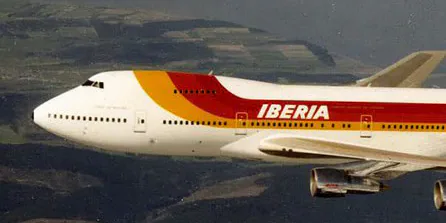
The colossal airframe, the instantly recognisable flight deck hump, and that earth-shattering rumble at full throttle: aeroplane enthusiasts worldwide will be misty-eyed at the news that, as of January, the final Boeing 747 jumbo-jet has left the production line in Washington state, USA. Though the aircraft is expected to remain in operation for decades to come, this revelation signifies the end of an era in the aviation industry.
The Boeing 747 can in many ways be considered as much of a pioneer as the De Havilland Comet or Concorde, in that it redrew the boundaries of air travel. Making its debut flight as early as February 1969 (the month before Concorde did so), the B747 was intended as a more capacious alternative to the older, single-deck Boeing 707. Since then, over 1,500 aircraft were built, delivered to various high-end airlines like British Airways and Lufthansa, including cargo-orientated equivalents operated by companies like FedEx and CargoLux.
Never before had air passengers been transported in such volume – the first B747s used the trademark upper deck behind the cockpit as a lounge for passengers originally, whereas even this space was enlarged and designated as a business class section in newer versions. The model’s largest variant can seat as many as 467 people, all the while attaining a maximum cruise speed of 580mph (933kph). With an empty weight of 220 tons, that’s roughly the same as 6 two-carriage trains that serve Cathays station! A highly customised B747 has even transported the incumbent US President in Air Force One since 1990.
This magnificent feat of engineering leaves little to be desired performance-wise, but alas, the discontinuation of its production isn’t without good reason. Moving a machine of this size through the air at 0.85 times the speed of sound requires a mind-boggling amount of fuel – up to 7 pints per second. Concerns about our climate, the B747’s efficiency and running costs have rightfully triggered a cease of production. More modern and efficient twin-engine alternatives such as the Boeing 787 and Airbus A350 will replace it, dramatically reducing pollution and running costs. These airliners are also considerably quieter – welcome news for residents near international airports.
Nonetheless, the aviation world raises a glass to the Boeing 747 and is respectfully cognisant of its revolutionary role in the transport industry.