
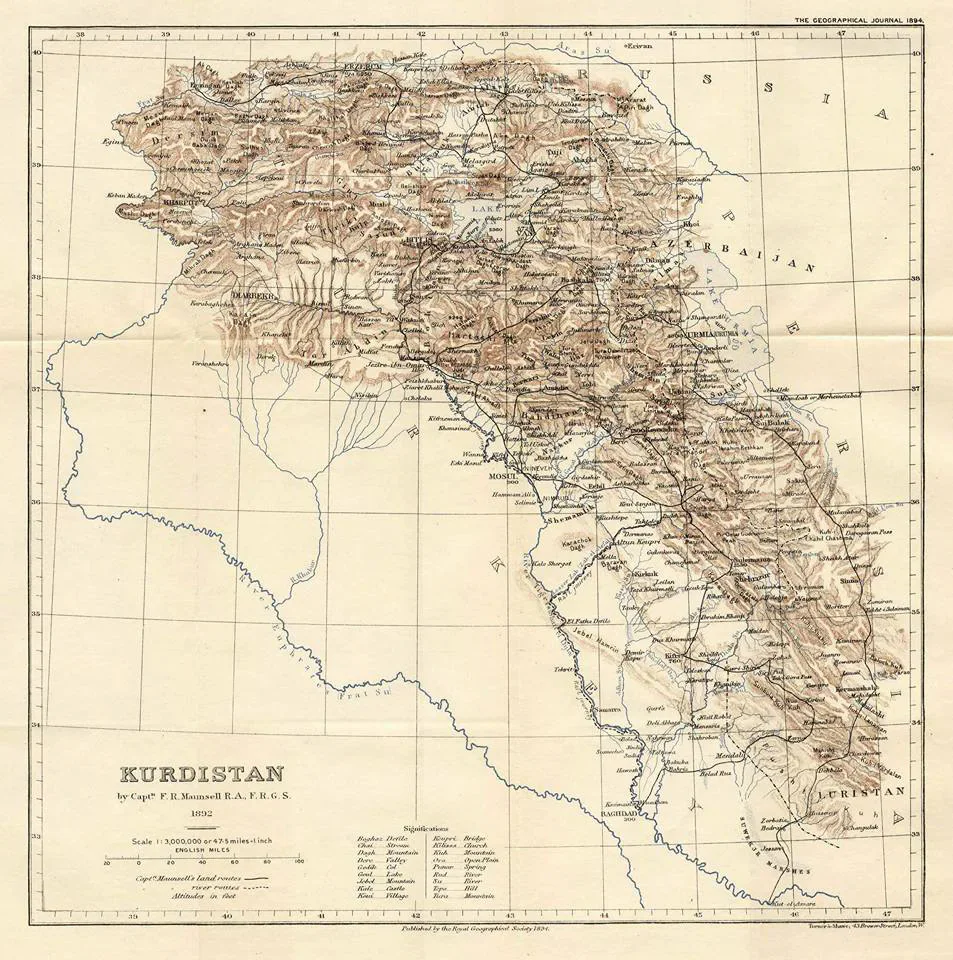
Rojava, the Kurdish homeland built on equality and democracy, is facing a troubling new chapter. After a decade of side-by-side fighting ISIS and the Kurdish oppressive Assad regime, the United States has abandoned the allies who expected to control their futures. Now the 4.5 million Rojava citizens face a future defined by uncertainty and military pressure provoked by Syria’s new government.
Rojava refers to the autonomous, Kurdish-majority region of Syria, also known as the Democratic Autonomous Administration of North and East Syria (DAANES).
In 2012, the Kurdish of Rojava, who endured maltreatment and discrimination for decades from the former prime minister, revolted, forcing Bashar al-Asaad to withdraw all his forces from the region.
From this, local communities established an autonomous government which would later become DAANES.
The multiethnic and religiously plural state has become synonymous for its secular governance, democratic structure, cooperative economy and advocacy for women’s rights.
For the estimated 30 million Kurds spread across Turkey, Iran, Iraq and Syria all left without an official Kurdish state, Rojava represented an opportunity for selfdetermination, genuine acknowledgment and to act as a base for championing Kurdish rights and further acknowledgment.
In January 2026, during a series of violent clashes between the Kurdish-led forces and the Syrian army, the United States delivered a deeply sad message.
US Special Envoy for Syria, Tom Barrack, declared ‘the original purpose of the SDF as the primary anti-ISIS force on the ground has largely expired’.
Former US Ambassador Henry Ensher was blunt ‘an independent existence for the Kurds is no longer part of US national security’.
Instead, Washinton now backs Ahmed al-Sharaa Syria’s de facto president, former al- Qaeda leader and previous US $10million dollar bounty holder, whom Donald Trump has called ‘a strong leader’.
On January 18th, 2026, a US-orchestrated ceasefire fund mentally altered Rojava’s fate.
The agreement forces the Syrian Democratic Forces (DAANES de facto army) to withdraw from all frontline positions, join the Syrian army and government and to integrate their administrative bodies into the Syrian state.
The deal will include transferring oil fields, gas, infrastructure and prisons holding ISIS detainees from Rojava control to Damascus hands.
Kurdish forces have already withdrawn from al Hol camp, which houses thousands linked to ISIS, stripping the capacity to defend themselves from previous enemies.
While the ceasefire includes the recognition of Kurdish cultural rights, these promises feel insincere when the very institutions that championed for women’s rights and democratic governance are dismantled.
From mid-January the Syrian government has engaged in siege tactics, spread terror and pushed mass displacement.
Amnesty International has warned that the ‘repeated rounds of fighting in Syria have had devastating impacts on civilians’.
It appears that many Kurds across the region are increasingly upset by the US decision to prioritise al-Shaara’s government.
This largely comes down to whether alSharaa can be trusted to respect regional differences.
After Al wites civilians have been killed along Syria’s Mediterranean coast, there are raising fears about the new government’s willingness to protect minorities.
For over a decade, Rojava stood as a unique political experiment.
The region implemented gender quality through government and miliary structures.
Its secular governance rejected both Bashar al-Assads authoritarianism and ISIS’s theocracy, building an economically cooperative and democracy-focused state.
The fight for these values was won on the ground through sacrifice and ambition.
The Syrian Democratic Forces fought alongside US forces, losing many men alongside their American allies.
Now, Rojava sacrifice seems to mean little in Washingtons calculations.
The abandonment of Rojava carries significance beyond Syria.
It demonstrates that American alliances are temporary and manipulated for Donald Trump’s strategic gain.
For Kurdish populations watching, the message is clear: aspiritions for selfdetermination are entirely subject to power calculations.
The region that symbolised progressive governance and women’s liberation now faces absorption into a state led by someone with extremist roots.
As former Ambassador Henry Ensher suggested, Washington sees Rojava’s best option as ‘full integration into a unified Syrian state’, erasing the autonomous structures built over the past decade.
As Syrian government forces entire control and Washington pivots to support alSharaa, Rojava’s democratic autonomy appears finished.
The question remains, what becomes of the millions who built their lives around these institutions and whether these promises for greater Kurdish autonomy are genuine or simply empty statements?
For now, Rojava’s people face a future shaped by those who prioritise conven ence over courage.
Their decade of democratic governance is being dismissed as merely a minor episode in Syria’s civil war, completley abandoned to accommodate Americas ever shifting Middle Eastern priorities.