
Keir Starmer has faced renewed accusations that he has moved too far from the pledges which solidified his election as Labour leader following Jeremy Corbyn. The controversy renewed when he unveiled Labour’s 5 missions for a better Britain - seemingly moving away from some of his more radical promises.
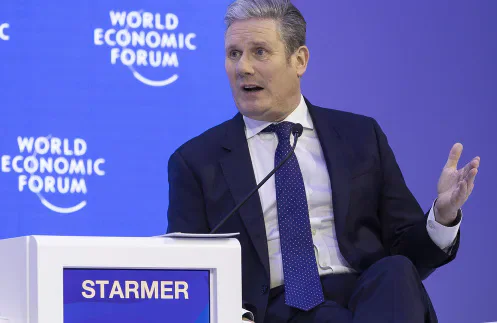
Starmer laid out five key missions for a Labour Government, arguing thatConservative leadership had not supplied a p[lan for the last 13 years for the country. He also said that the last 13 years had been plagued by a series of “sticking plaster politics” with short-term solutions, rather than political leaders getting to the crux of the problems facing the UK. The promises had a focus on economic growth, green energy, improving the NHS, increasing opportunity, and making Britain’s streets safer.
Following the announcement, Chris Mason, BBC Political Editor asked Starmer why people should trust that he’d stick to these pledges when many had accused him of abandoning those that secured him as Labour leader. Starmer clarified that during the leadership hustings he argued that none of his promises would be possible without getting Labour into government. Now, he claims to have made the party appear electable again.
While his leadership promises took on a more left wing approach, presenting him as a logical heir to Corbyn, he has moved the party closer to the centre during his leadership
While his leadership promises took on a more left wing approach, presenting him as a logical heir to Corbyn, he has moved the party closer to the centre during his leadership. Many have compared his policies to those of Tony Blair and New Labour. He unveiled the commission on the UKs future report alongside Gordon Brown, former Labour Prime Minister. The plan was cited as a plan for a ‘new Britain’, harking back to the “New Labour, New Britain’’ slogan used in the last Labour Government. Furthermore, he has taken on other slogans from that era, saying “tough on crime, tough on the causes of crime” during his speech when unveiling the five missions for a Labour Government. Starmer argued that even though we might have heard it before, it is the right approach.
Many have compared his policies to those of Tony Blair and New Labour.
Although there have been questions raised on his commitment to his promises, it cannot be denied that he has stuck by some. He has continued to argue that tax should be raised on top earners, has stuck to Westminster reform pledges, and has made the Labour party an effective opposition to the tories. However, more traditionally left wing policies such as abolishing tuition fees and bringing in more public ownership seem to have been abandoned by the party. While the Great British Energy company creation is an example of him sticking to this, there aren’t any others which people immediately remember when thinking about the Labour Party today.
The overarching sentiment from Labour Party members seems to be that Starmer has made the party electable.
The overarching sentiment from Labour Party members seems to be that Starmer has made the party electable. Arguably, the party is much more united than it had been under previous leaders. Labour remains many points ahead in the polls. The general consensus is that it has to achieve an election win to be able to implement more radical policies (which grassroots members in particular are hugely committed to). Many believe that the missions for a Labour Government have demonstrated Keir Starmer’s ambition for Downing Street and have further presented him as Prime-Minister-in-waiting presenting a real plan for a Labour government - with plans for at least a decade in power.