
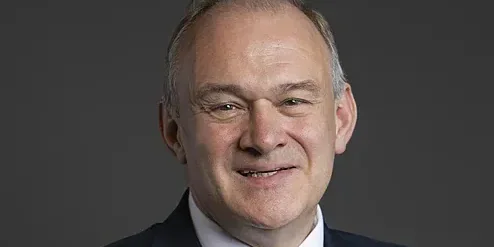
The Liberal Democrats achieved something remarkable in the 2024 election, surging from 11 seats in 2019 to 72, their best ever result. Ed Davey’s unconventional campaigning, from slip and slides to paddleboarding, captured attention while delivering serious messaging about the NHS, social care and equality. The party swept through the Conservative stronghold of the Southwest, turning blue seats comfortably democrat orange. Local election success has followed, with the Liberal Democrats winning 23% of available seats, compared with 20% for the Conservatives and 6% for Labour. Despite this, turning electoral success into political influence, is a completely different challenge.
The Liberal Democrats have not been idle. Ed Davey has proposed ‘war bonds’ (loans the public or institutions could purchase to fund national defence), he estimates this could raise up to £20 billion. He has linked the proposal to concerns about US reliability, saying that ‘because of Donald Trump, there has to be a question about whether we can rely on the United States’. More significantly, in December the party secured a major parliamentary victory, which brought forward a UK-EU customs union, bringing the UK closer to Europe again. 65 Liberal Democrat MPs voted in favour of the motion, resulting in a 100-100 tie, which the Deputy Speaker then broke by casting the deciding vote in favour. This underlines the genuine power that 72 MPs can wield in a fragmented Parliament. The party has also championed democratic accountability, vocally opposing government delays to 2026 scheduled local elections, demanding peoples voice at this years local elections. Ed Davey has even contacted the Equalities and Human Rights Commission, asserting that 10 million peoples democratic rights have been ‘ripped away’.
suggests 25% of people would likely vote Reform, while only 14% intend to back the Lib Dems. In addition, as Kemi Badenoch rebuilds the Conservative Party, some voters who temporarily defected may return home. Britains political landscape has become a five-party system, with everyone competing for limited airtime.
Media coverage is given to parties who fit three categories: the governing party (Labour), the official opposition (the Conservatives) and those generating the most controversy (mainly Reform and the Greens). Therefore, the pragmatic, pro-institutional and centrist approach of the Liberal Democrats means they largely go unnoticed. This means success, like their customs union victory, wasnt clearly attributed to them within public consciousness.
Meanwhile Reform dominates headlines by appointing controversial figures like GB News presenter Matt Goodwin as their candidate in the Gorton and Denton by-election. As neither the governing party nor the main opposition, the Liberal Democrats struggle massively against populist opponents who deeply understand sensationalism, which attracts coverage. Sensible pragmatists will never gain the same media space as incendiary populists.
The 2026/2027 local elections represent a crucial test. Was the success of the 2024 general election a genuine realignment or merely a protest vote against an exhausted Conservative government? Only time will tell.
However, the opportunity for gain does exist. Labour faces approval issues and Reform, despite gaining votes, are polarising the country. The Liberal Democrats have leadership, coherent policies and parliamentary seats, a strong foundation.
Do not forget about the Lib Dems. Their 72 MPs plays an important role in our governance, and while they may not gather controversy or generate constant media coverage, they represent constituencies and the country with genuine concerns that deserve attention, beyond the news cycle. In a fragmented political landscape, their pragmatic, progressive and people first message matters now more than ever.