
The film adaptation of Scott Cawthon’s indie video game darling Five Nights at Freddy’s was first announced in April 2015, only eight months after its initial release. After multiple script rewrites, two different production companies and directors, and a plethora of cast members signing on to star in the highly-anticipated blockbuster, the film was finally released in cinemas worldwide on October 25th. As a hardcore fan since the first game’s release, I managed to see the film after years of impatience on the day of the UK release.
With the worldwide gross box-office intake currently sitting comfortably at over $250 million, the film comes second only to The Super Mario Bros. Movie in the biggest opening for a video-game-to-film adaptation. But Five Nights at Freddy’s is no stranger to such success.
The FNAF series — consisting of thirteen games, twenty-eight books and novels, and now the newly released feature film — has sold 33.5 million units worldwide. First released independently on Steam, the game was an overnight success, amassing a cult following through the gameplay’s simplicity and sheer scare factor. It is its extensive backstory, perhaps, that is most to blame for the dedicated fan base that Cawthon has created.
This iceberg of lore has been picked apart by fans for years, with each new release adding to (or, in some cases, further entangling the wires of ) the deeper tale behind the original game. The cohesiveness of the series' lore is largely credited to YouTuber MatPat, whose analyses of the series’ narrative made him a celebrity within the fandom, ultimately earning him a cameo in the film itself. Despite the film’s perceived success, Five Nights at Freddy’s has accrued widespread negative reviews from critics — with Rotten Tomatoes giving the film a critic score of just 30%.
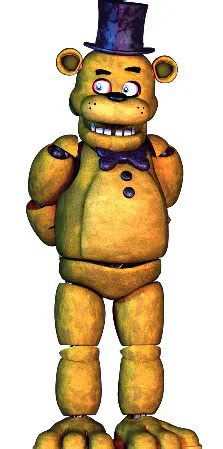
However, after watching the long-awaited film on opening night, I can safely say... it isn't that bad. To begin, I’ll address the massive, animatronic elephant in the room: it bore little to no relation to the official, canon lore developed over the nine years the franchise has been around. The fundamentals were similar; fursuit-clad-killer lures children into the back of a popular 80s pizzeria, stuffs their bodies into the suits of four singing animatronics and drives them to kill future employees of the restaurant.
This allowed the general premise to be easy to follow for new audiences whilst keeping its core plot points true to the original. Unfortunately, there were parts of the film that were just, for want of a better term, cringe-worthy. The scene where Mike, Abby, and Vanessa build a fort with the possessed, murdering robots was simply odd to watch and ended with general disdain among audience members when Bonnie goofily falls onto his back and gives a thumbs-up when asked if he is okay.
The film’s overall pacing seemed clunky in places — too much time focusing on a lore-irrelevant custody battle that never materialised, not enough time adhering to its core elements of horror. Jumpscares were few and far between, with the only three jumpscares throughout the film being of the same character. The casting, however, was spot-on.
Josh Hutcherson really carried the emotional depth needed in his role of volatile security guard Mike Schmidt. Matthew Lillard sparked zero doubt in anybody’s mind that he would be able to bring tension to his role after an outstanding performance in Scream (1996). Elizabeth Lail is no stranger to being a powerful, borderline scream queen after a stint in Netflix's You (2018), and her portrayal of enigmatic police officer Vanessa arguably made the film.
Jim Henson’s Creature Shop brought the four animatronics to life freakishly well, with an almost uncanny likeness to them that I had longed for before the release. Personally, I wish that this was preserved through the character’s movements, which lacked the same robotic edge that made them so horrifying in the games. The eyes glowing red, whilst undoubtedly a good ode to the books, stripped them of their lifelessness, and seemed almost too obviously-petrifying.
The film’s soundtrack was perfect, with Talking in Your Sleep by The Romantics a period-accurate, sinister and spectacular choice for the animatronic band's performance — it was exactly what I had envisioned the band to sound like. Five Nights at Freddy's is a clever little film, you can tell it has been curated with the best interest of the fans at heart. Yes, its gore was underwhelming, with the film lacking many elements that make it worthy of being dubbed a horror film, but it is still an enjoyable, nostalgic watch.
With many of the cast having signed on for at least three films and a confirmed second film already in production, we will have to wait eagerly for the next instalment in the series. Hopefully, this sequel doesn't take another nine years.