
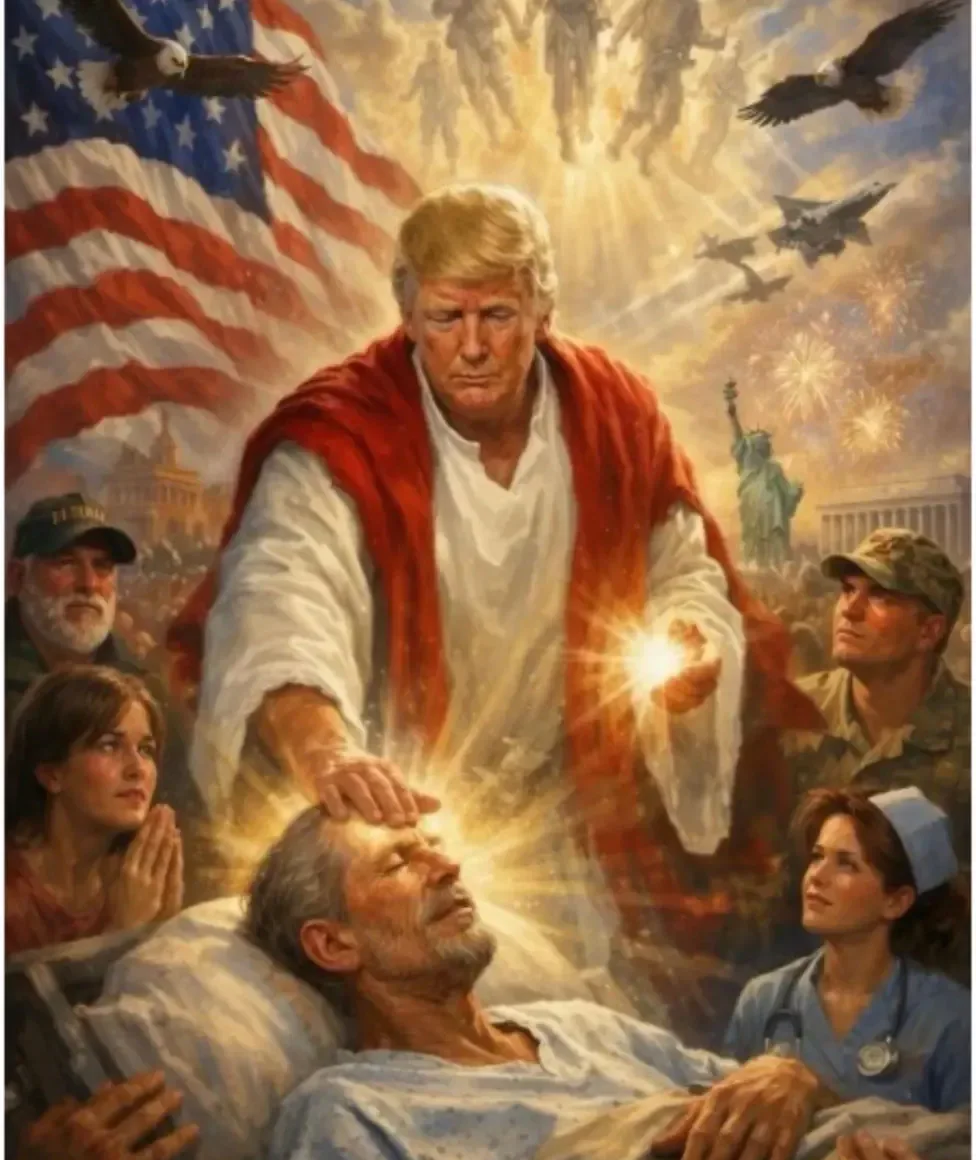
In today’s generation, the use of Christian symbolism to promote and justify actions and opinions has become increasingly common, especially in the world of politics. As both a religion and a powerful symbolic language, Christianity has played a central role in Western culture, society, and political life throughout its history. This widespread influences resulted in some parts of its biblical message being expanded upon and taken out of context, leading to what can be referred to as a “messiah complex.” One of the core beliefs in Christianity revolves around the Messiah—Jesus, who is seen as a divine saviour enduring suffering to redeem others in the end.
This symbolism of a messianic figure has extended beyond theology into the realms of politics and psychology. The pattern involves individuals, particularly public figures, presenting themselves as destined to save others while also feeling persecuted. Though this is not entirely accurate to biblical texts, in a modern Western context, the messianic figure is often portrayed as white, reflecting cultural narratives and historical power dynamics.
As a result, there is an explosion of Christian imagery that provides public figures, who seek a moral high ground, with more legitimacy and authority. With this broader context in mind, we can now address the issues surrounding Donald Trump's AI post about Jesus and Russell Brand's performance on the Piers Morgan show. Both examples highlight deep cultural associations between spiritual authority and the concept of the white savior..
In Trump’s AI generated image we see him dressed in white robes with glowing hands extended over a sick man, very much visually mirroring Jesus healing the sick. Though some may say it clearly Trumps way of presenting himself as a Messianic figure, despite his claims that it was him as a doctor. By aligning himself with this Christ-like imagery, Trump taps into a narrative that he is on a divine mission and how the people are out to persecute him.
This in turn makes him more loved by his fans as they become more passionate and unable to see his wrongdoing. We can see how the post just wasn’t some image but one of a political performance manipulating people’s beliefs to appear more righteous and powerful. Moving on, we can now discuss how Russell Brand's Bible incident fits the same pattern.
Brand appeared on the Piers Morgan show, and when asked to find a scripture he mentioned during court, he fumbled through his Bible on live TV, struggling to find any relevant verses. Many saw this as an exposure of his performative Christianity and how he, too, was exploiting religion to improve his image in the public eye.. While not exactly like Trump's AI image, it still resonates with the idea of Christianity being taken out of context and exploited.
Many brands use Christian symbols to frame themselves as innocent and morally upright. Trump has consistently presented himself through a messianic lens. It could be argued that the height of his messiah complex peaked when he brought a Bible to court.
By presenting scripture in a public setting, he portrays a narrative of persecution, making himself appear innocent and even spiritual. While Trump uses Christian symbolism to evoke power and a moral high ground, Brand uses it to enhance his character in hopes of redemption. As a Christian myself, I am appalled to see how my faith is being manipulated.
It is important that we recognize these figures with a messiah complex for what they truly are: frauds.