
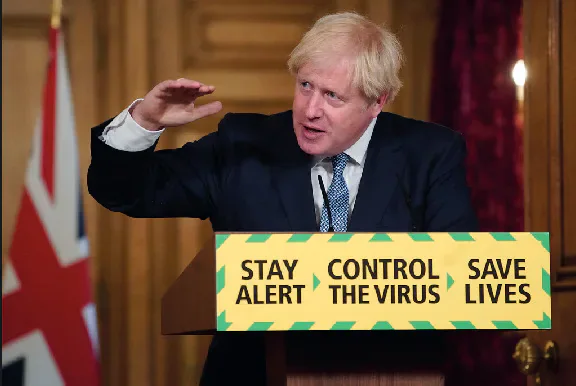
The UK COVID-19 inquiry, which is investigating the government’s response to the pandemic, has been holding hearings for the best part of the past few months, yet it has only been in recent weeks where it has finally broken into headline news as key political players like Matt Hancock and Dominic Commings have started stepping into the box.
For most of us, the pandemic and subsequent lockdowns may feel like a lifetime ago, but not everyone can forget so easily. Over 200,000 people are reported to have died from the virus, and thousands of others are still suffering from long COVID symptoms today.
During this terrifying and unprecedented time we all turned to our government for guidance, and yet what the COVID inquiry is slowly unveiling is that this was a grave mistake.
It’s painting a picture of abject chaos and indecision at the heart of our government, where crucial decisions were decided over WhatsApp by politicians who had absolutely no idea what they were doing, and often refused to listen to the advice of those that did.
Government advisors have openly spoken about how centralised decision-making was during the pandemic, and Boris Johnson’s most trusted advisors have voiced their frustrations about how he profusely refused to listen to them.
Instead of uniting together during this time of crisis, it is slowly becoming apparent that Downing Street was in a state of civil war.
The inquiry has also unveiled how insensitive and cruel senior politicians were during this time of global crisis, with our former Prime Minister callously remarking that “the virus is just nature’s way of dealing with old people” as he then later commented that he would rather “let the bodies pile high” than impose a new lockdown. The government’s chief scientific adviser, Sir Patrick Vallance, also provided evidence from a notebook entry in 2020, where he wrote that Boris Johnson was “obsessed with older people accepting their fate and letting the young get on with life”.
It was also revealed that Boris had asked “Why are we destroying the economy for people who will die anyway?” in a meeting with senior advisors and had referred to the deadly virus as not a “big deal” and similar to the swine flu. He felt so strongly about this that he even considered injecting himself with COVID on national television during the early stages of the pandemic.
The blatant disregard for lockdown restrictions by the same senior ministers who actually implemented them was also uncovered by the inquiry, with one Civil Servant admitting that “not a single day passed where Downing Street was compliant with COVID rules”.
This has been further amplified by the revelations of the numerous parties held in 10 Downing Street during the pandemic which have been shockingly depicted in Channel 4’s new docudrama Partygate based on evidence from this investigation.
Although some ministers were served fixed penalty fines for breaking the rules, the most they had to pay was £50, whereas members of the general public were receiving fines of up to £10,000. This has caused public outrage over the unfairness of the policing behind the lockdown restrictions, especially as new statistics reveal that fines were seven times more likely to be issued in poorer areas and were predominantly handed out to young people (aged 18–24).
Former home secretary Priti Patel herself even admitted during her hearing that these fines were not proportionate.
Matt Hancock, who was Health Secretary at the time, has also come under fire by former colleagues, who described him as displaying “nuclear levels” of overconfidence when discussing his handling of the pandemic.
Following on from this, Lord Stevens informed the inquiry that Hancock often took the position that “[he], rather than the medical profession or the public, should ultimately decide who should live and who should die”.
Overall, the inquiry has showcased so far that important decisions were heavily centred around a small team of men in Downing Street who valued their contributions over those of scientists and professional advisors, who had a complete lack of respect for the lockdown restrictions and a complete disregard for the health and safety of the most vulnerable people in our country.
If this inquiry has showed us anything, it’s that these people are not to be celebrated for their contributions during the COVID pandemic but to be condemned, and that their names will go down in history but for all the wrong reasons.