
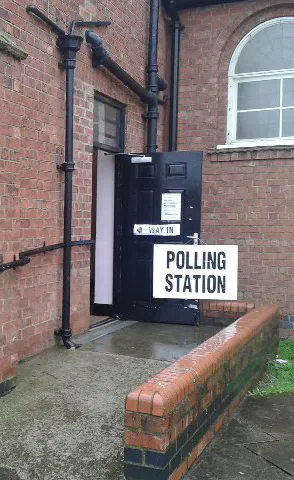
Three years away from the next general election and some important democratic issues hang in the air yet to be disused or decided. Throw your mind back to May 2011 (if you have fond childhood memories for referendums), when voters across the United Kingdom were asked a constitutional question to determine whether they believed it was time for a change.
The referendum proposed replacing the long established First Past the Post system for electing Members of Parliament with the Alternative Vote.
The result was decisive. Around 68 percent voted No, while 32 percent voted Yes, on a turnout of roughly 42 percent. Fifteen years on, it is worth asking what that moment tells us about the state of British democracy today.
The referendum was a product of the 2010 hung parliament: after the general election produced no overall majority, the Conservative Party and the Liberal Democrats formed a coalition government.
Electoral reform had long been a Liberal Democrat priority, and the referendum was written into the coalition agreement.
It was not a vote on proportional representation, as some campaigners had hoped.
It was a narrower proposal to introduce the Alternative Vote, under which voters rank candidates in order of preference. If no candidate wins over 50 percent of first preferences, the lowest placed candidate is eliminated and their votes are redistributed until someone passes the 50 percent threshold.
Supporters argued that AV would ensure MPs had broader support in their constituencies.
Opponents claimed it was confusing, expensive and unlikely to deliver fairer outcomes.
The No campaign proved more effective. It linked AV to cost at a time of austerity and portrayed it as a self interested project of political elites.
The Yes campaign struggled to explain how the system worked and why it mattered to everyday voters. The defeat effectively shelved Westminster electoral reform for a generation.
Since 2011, British politics has undergone continuous strain: the 2014 Scottish independence referendum, the 2016 referendum on EU membership and successive turbulent general elections have tested the resilience of institutions.
The 2016 vote to leave the European Union exposed sharp regional and generational divides.
In 2019, the Conservative Party won a large parliamentary majority with 43.6 percent of the vote, securing 365 seats.
Under First Past the Post, seat share can diverge significantly from vote share.
Smaller parties with geographically concentrated support, such as the Scottish National Party, can perform strongly, while parties with evenly spread support, such as the Liberal Democrats, can struggle to translate votes into seats.
The 2024 general election continued this pattern of distortion in diffe ent ways. Labour secured a substantial Commons majority on a vote share that was historically modest for a landslide.
Reform UK gained millions of votes but won only a handful of seats.
The gap between national vote share and parliamentary representation has become a recurring feature rather than an anomaly.
That fact alone has revived discussion of whether First Past the Post still reflects the political landscape of a fragmented, multi party system.
Looking back at 2011, it seems that the referendum closed a door without fully resolving the debate. British politics is more plural and more polarised than it was fifteen years ago.
The rise of popularity for Reform, Labour and the conservatives facing a crash in popularity and National parties in the devolved assemblies both seeing an increase of backing changes the shape of the familiar Political landscape we are used to.
Whether First Past The Post can continue to accommodate a fragmented electorate without deepening dissatisfaction is an open question. Reassessing the voting method does not require rejecting past decisions, it requires recognising that constitutional choices should evolve alongside the society they represent.