
Israel’s new government, a ‘Religious Zionist’ coalition between the returning Prime Minister, Benjamin Netanyahu, and an assortment of right-wing extremist parties has sparked widespread protest over its proposals to overhaul the state’s judiciary. The incoming legislation is viewed by many as an attack on democracy which has prompted worry that the Jewish state is teetering on authoritarian rule by religious extremists.
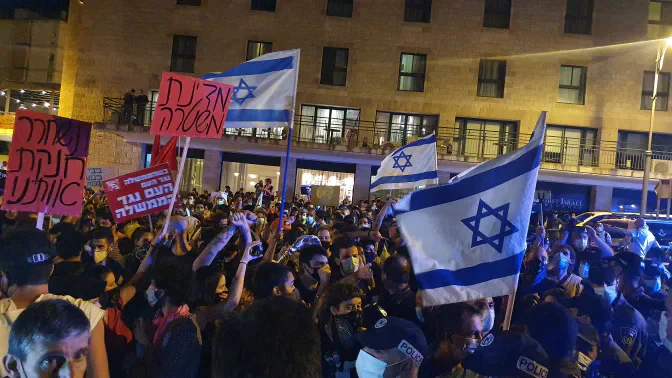
The legislation is viewed by many as an attack on democracy which has prompted worry that the Jewish state is teetering on authoritarian
The protests, which have been going strong for over two months, have witnessed over 200,000 people taking to the ancient streets of Jerusalem and other cities across the state. Demonstrators have blocked roads and massed outside the Knesset, Israel’s parliament, and several industries have held strikes.
Israeli PM, Benjamin Netanyahu, has denounced the outcry against his new government, stating: “The people made their electoral choices and the representatives of the people will exercise their right to vote here in the Knesset. That’s called democracy.” Those representatives have also reinforced their position on the intended overhaul of the judiciary, with the Justice Minister stating that the public dissent “will not stop the legislation”. In Tel Aviv, protestors staging a ‘day of disruption’ were attacked by police with tear gas and stun grenades.
Israel’s ‘new’ government, elected in December, is headed by a returning Netanyahu, who had previously served as Prime Minister from 2009 to 2021 and, before that, from 1996 to 1999. However, as the state has shifted rightwards through decades of increasing violence with its displaced Palestinian populations, the returning incumbent has allied himself with the extremist Religious Zionists and other far-right parties to solidify his anti-Arab, Zionist-Nationalist rhetoric. Alongside UN condemnation, there is a mounting international consensus that the sacred homeland of many of the world’s faiths has lost a moral standing.
Some of the voices from the new coalition include Bezalel Smotrich, head of the Religious Zionist party and now Finance Minister, who has called for the incorporation of traditional Jewish law into Israel’s legislation. Also in government is Itamar Ben-Gvir, the populist leader of the Otzma Yehudit (‘Jewish Strength’) party which pledges a hardline approach to ridding the state of all “enemies of Israel”, previously calling for the deportation of all Arabs from Israel.
Though the demonstrators’ fervent waving of flags donning the blue Star of David may present a united opposition - even persuading figures from industries not publicly involved in politics to join them on the streets; from those in tech to bankers, and representatives from the army and intelligence – the protests have also brought to light the state’s tarnished relationship with democracy as it pertains to its Palestinian population.
Notably absent from the white and blue ripple of flags are the Palestinian colours, banned by the organisers as a result of right-wing speakers refusing to share the stage with Israeli-Palestinians. There have also been reports of violence between Israelis and Palestinians during the protests, despite the two sides sharing some common ground on the issue of Israel’s governance.
There have also been reports of violence between Israelis and Palestinians during the protests
The organisers of the demonstrations have reinforced the need for a focus on the single issue at hand, side-lining the wider debate on the Israeli government’s latest atrocities against Palestinians. Israel’s recent raid of Nablus in the West Bank resulted in 11 dead; it was followed by bombing of the densely populated Gaza Strip. The recent violence prompted condemnation by the UN’s special coordinator for the Middle East peace process, Tor Wennesland, who said he was “deeply disturbed by the continuing cycle of violence and appalled by the loss of civilian lives.”