
For the first time in a generation, the people of Wales have woken up to a Senedd no longer run by Labour. Labour’s grip has snapped and Plaid Cymru has become the biggest party; meanwhile, the Conservatives have been largely pushed out by the new right-wing kid on the block, Reform UK. The results of Wales’ Senedd election mark a new era in Welsh politics.
This election quickly became what many called a ‘two-horse race’ between Plaid Cymru, Wales’ progressive, pro-independence party, and Reform UK, a firmly right-wing party focusing on tackling immigration and cutting taxes. Plaid Cymru claimed 43 seats, with Reform just behind on 34; Labour claimed nine, Welsh Conservatives seven, the Green Party two and the Liberal Democrats one. No party achieved a majority of 49 seats.
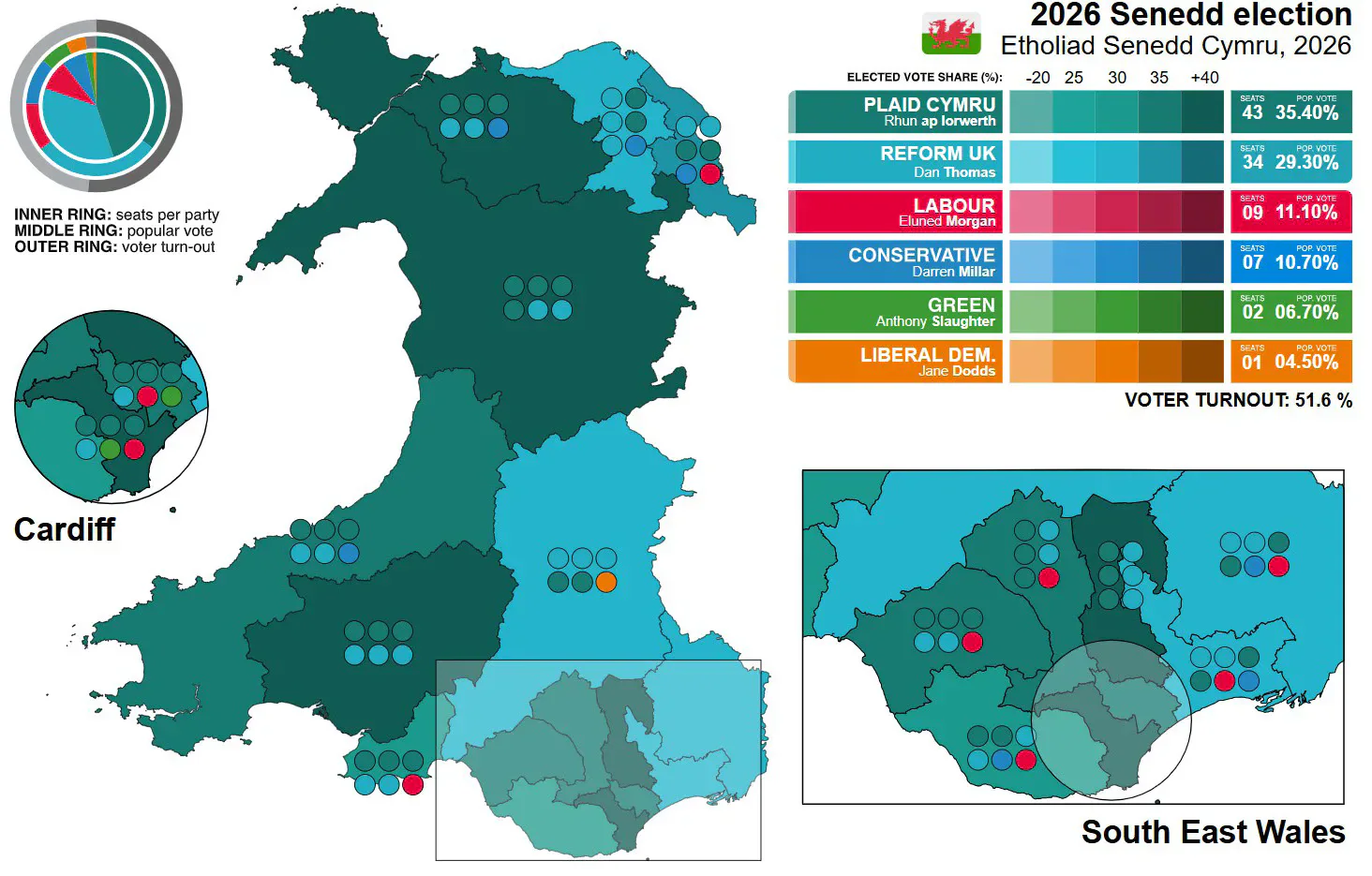
This year, Wales debuted a new ‘closed proportional list’ voting system, designed to allow for proportional representation. As part of this system, Wales was divided into 16 new constituencies, with each one having six seats up for grabs. This system had the potential to create more opportunity for smaller parties and threaten the ‘two-party politics’ that have dominated Wales - however, the huge disparities between the policies of Reform UK and Plaid Cymru resulted in many choosing to ‘tactical vote’ against the party they didn’t want, rather than vote for the one they did.
Therefore, this election once again resembled a ‘first past the post’ voting system with a tense neck-and-neck surge between the two parties; however, it did also allow for new voices to be heard. The Green Party has for the first time gained a voice in the Senedd; while performing worse than what polls predicted, their two seats provide them with a foothold. The Liberal Democrats also gained a seat, showing how this new system can be a gateway for smaller parties.
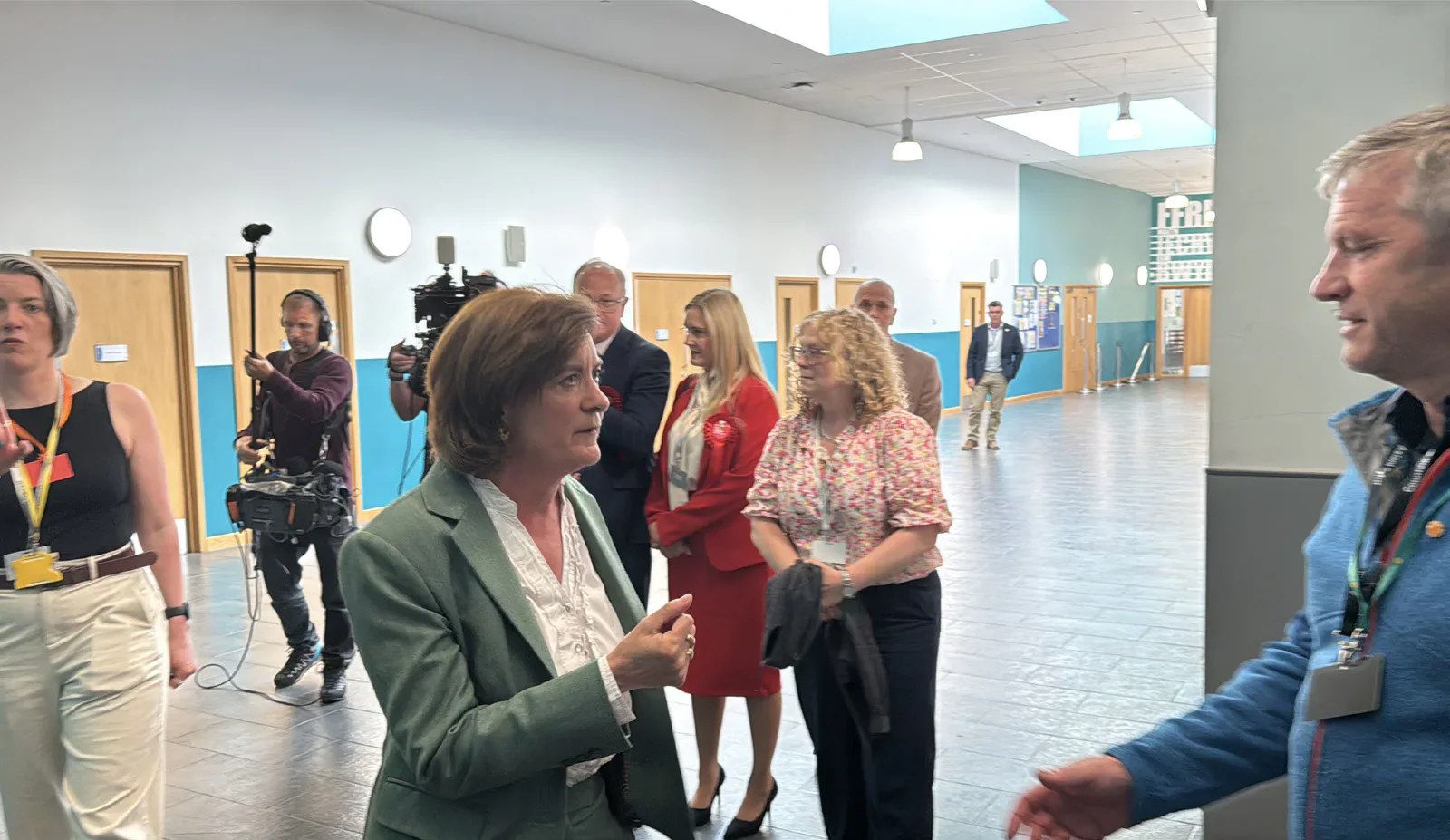
For Labour, this election brought with it huge losses, losing 35 of their previous seats. This resulted in the First Minister herself, Eluned Morgan, losing her own seat in the Senedd. During the BBC’s live coverage, Welsh Labour candidate Huw Thomas said Labour must take time to “reflect” on the reasons behind these losses.
The Conservatives had similarly crushing losses, losing 22 seats. One thing is clear: the Conservatives are no longer the dominant right-wing party in the Senedd. In a landscape of political disillusionment, economic instability and struggling healthcare and education systems, the dramatic difference between Plaid and Reform appealed to voters.
Their polarised policy distance collapsed the right-left axis that has served Conservatives and Labour for decades, creating a new axis defined by the tension between Plaid’s Welsh nationalism and progressive cultural ideologies, and Reform’s British unionism and anti-immigration rhetoric, making them the only two parties to win a seat in every constituency. After winning a seat in the Casnewydd Islwyn constituency, Reform leader Dan Thomas claimed that “for decades, the Welsh valleys and cities such as Islwyn and Newport have been [...] forgotten by the old parties of Wales. [...] Now, in Reform, they finally have a voice.” In his victory speech, Plaid leader Rhun ap Iorwerth said “we have won because we represent hope over division. [...] Wales demanded a new beginning and now a new dawn beckons.” These huge changes mark a turning point for Wales, but also a time of political uncertainty. With no party achieving a majority, there are two possible scenarios.
Firstly, Plaid Cymru could form a coalition government with another party - however, with the Greens at just two seats, they are out of the running, and Plaid have given no indication that they would be happy to share governance with Labour, the party which previously dominated Welsh politics. Therefore, the likely scenario will be a minority government run by Plaid Cymru, in which Plaid would have to convince other parties to vote for their policies on a case-by-case basis, requiring a high level of trust. But with so many new and opposing voices in the Senedd, whether this will be a success or setback will depend on whether they can learn to speak to one another.