
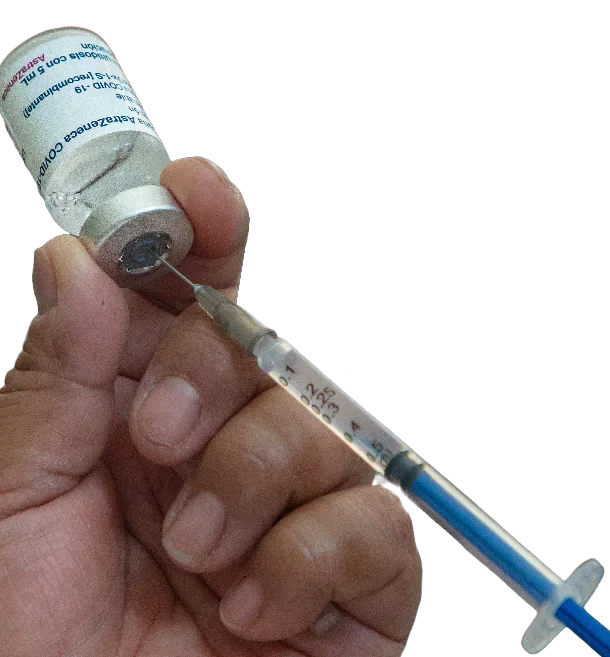
Vaccines are essential tools in safeguarding public health by helping to build herd immunity. This form of immunity arises when a large portion of a community becomes immune to a disease, making it harder for the pathogen to spread and protecting vulnerable individuals who cannot receive vaccines themselves.
How do vaccines achieve this? Vaccination is a prophylactic measure whose end goal is to provide individuals with antibodies against foreign pathogens. B cells, a type of immune cell, recognise these foreign pathogens and produce antibodies against them. This process, which is part of the adaptive immune response, also generates memory B cells, which will rapidly produce antibodies upon secondary exposure to the pathogen, allowing us to quickly and efficiently clear the infection before it can cause illness.
We typically vaccinate against viral infections, such as COVID-19, measles and rabies and bacterial infections such as diphtheria, meningitis, and tetanus. Their success in reducing and even eradicating deadly diseases has been widespread; for instance, smallpox was declared eradicated in 1980 thanks to global vaccination efforts. Similarly, tuberculosis cases have drastically declined due to effective vaccines. However, vaccination rates must remain high to prevent outbreaks. Recent measles outbreaks, for example, are partly due to declining immunisation rates—only about 85% of children are currently receiving the two recommended doses of the MMR (measles, mumps, rubella) vaccine, falling short of the World Health Organization’s target of 95%.
Due to the nature of vaccinations in eliciting an immune response, they can often cause mild side effects such as inflammation, fever, swelling, and fatigue due to recruitment of innate immune cells to the site of injection, but these effects are minimal in comparison to symptoms a person may experience in the case of severe disease.
Of course, no vaccine is perfect for every person who will have it, and we can see more severe adverse reactions and allergies, however these are still easily treatable and closely monitored. Vaccines undergo extensive testing and monitoring to ensure safety and efficacy. Despite myths, vaccines cannot cause the diseases they protect against and have no proven link to conditions such as autism or sudden infant death syndrome.
Overall, vaccines are a crucial, safe, and effective way to equip the body’s immune defences, protecting not only individuals but also entire communities. By maintaining high vaccination rates, we ensure a healthier, more resilient society for all.