
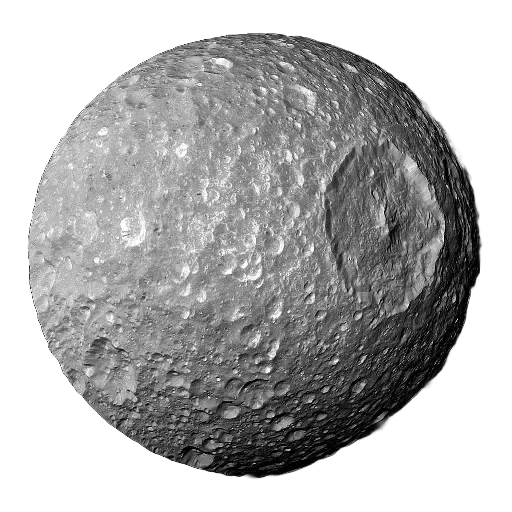
An unlikely candidate for harbouring life has emerged. Miranda, one of Uranus’ small and mysterious moons, has, according to recent findings, presented potential for life. Beneath its icy exterior lies the possibility of a hidden ocean, a groundbreaking revelation that challenges our assumptions of possible life beyond Earth, as well as raising questions about habitable environments.
The feasibility of Miranda having subsurface oceans was raised in a 2024 study in The Planetary Science Journal. A team, led by planetary science journalist Tom Nordheim, examined the images and data from NASA’s Voyager 2 mission, which offered our only close-up view of Miranda in 1986. By re-analysing these images with advanced computer models, the team found features consistent with subsurface heating, an indication of the existence of liquid water. This ocean, if present, would lie beneath an icy crust 31km thick and 97km deep, a remarkable size for a small moon with just a 146 mile radius.
This potential discovery is significant, as Miranda’s distance position, existing 2.7 billion kilometres from the sun subjects it to extreme cold, making it an unlikely place for liquid water. It is known to planetary scientists that the moons of other distant planets in the solar system possess potential subsurface liquid water oceans, such as the Jovian moon Europa and the Saturnian moon Enceladus. These moons exist outside the “goldilocks zone”—the optimal distance from a star in which liquid can exist on a world’s surface, that was previously thought to be a requirement for habitability. The findings of liquid water on moon’s, bring into question the distance from a star required to support hidden habitats, as long as internal heating mechanisms are at play. This suggests that there is the potential for life in and far away from our solar system.
Miranda’s surface consists of a mosaic of towering cliffs, deep canyons and unusual regions known as coroni, as well as oval areas with layered patterns. This varied landscape suggests a history of intense geological activity. Tidal heating is a likely reason for these features, occurring due to the gravitational pull caused by its proximity to Uranus and nearby moons. It orbits Uranus in a slightly elliptical path and the varying distance causes its structure to stretch and compress, creating heat from friction inside. This same process is seen on the other moons with the potential for oceans.
Only further research like this study will help give us the tools to discover the true extent of its habitability, as the endless scientific quest to find life far from home ensues.