
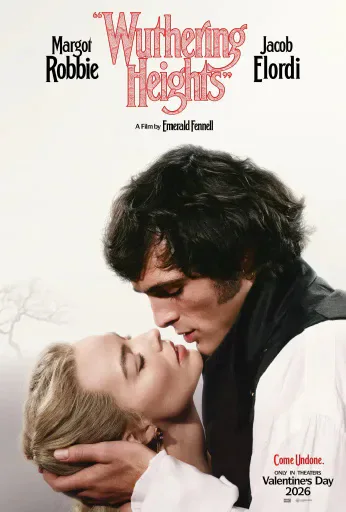
One of the most talked about releases of early 2025, Wuthering Heights arrived in cinemas on the 13th of February, strategically just in time for Valentine’s Day, which is when my girlfriend and I went to see it. It is, without question, a divisive film. Still, I approached it with genuine curiosity. I’m not someone who dismisses a work before seeing it for myself. In many ways, this modernised adaptation surprised me with its ambition. I loved the lavish costuming, and the dreamlike production offered a visually striking interpretation of a novel that was already steeped in the supernatural.
The casting has been a major point of controversy, particularly the unfortunate decision to depart from Emily Brontë’s original descriptions of both protagonists—details that carried thematic weight in the book. I understand that criticism; however, I cannot deny the chemistry between Jacob Elordi as Heathcliff and Margot Robbie as Catherine. Their dynamic is magnetic and at times overwhelming, which feels entirely in keeping with the film’s intentions. Charli XCX’s soundtrack heightens this dark atmosphere exceptionally well; her music doesn’t just accompany the film, it shapes it, painting an emotional landscape around the characters’ obsession.
For those expecting a faithful adaptation, this is not that film. The film’s stylised quotation marks around the title act as a subtle warning: this is a retelling, not a recreation. Emerald Fennell focuses almost exclusively on the chaotic, toxic, and obsessive bond between Cathy and Heathcliff, stripping away much of the novel’s broader narrative structure.
From a technical standpoint, the film is stunning: the cinematography is lush, and the camera work is expressive and bold. I can’t deny that it’s directed very well.
However, something is missing. By narrowing the story, the film inevitably loses the depth and complexity that make Brontë’s novel so enduring. Several characters and subplots are condensed or removed, and with them goes some of the richness that defines the original 1847 text. The film is thematically intense but not as layered as it could be.
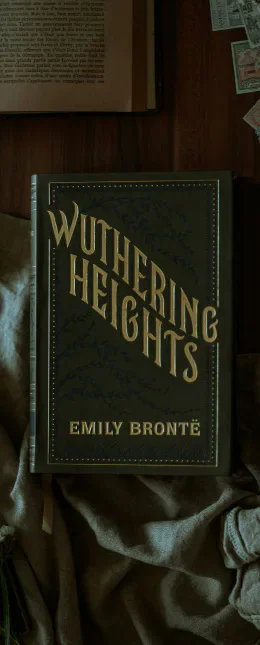
The sexualisation, in my view, is a deliberate reflection of the discourse that surrounded the novel when it was first published. Brontë’s work was heavily criticised for its scandalous themes and emotional intensity, so the film’s choice to lean into eroticism seems designed to amplify those same unsettling feelings. In a way, the strong reactions from modern audiences mirror how readers of the time responded to the book’s rawness and moral ambiguity. Because of that, I doubt this adaptation will stand the test of time in the way the novel has, but I do think people will eventually look back on it with a certain appreciation for its boldness and ambition.
I doubt this adaptation will stand the test of time
Still, there is plenty to like. This film is far from awful. Its unapologetically sensual, fever-dreamlike quality will appeal to viewers who enjoy reinterpretations rather than strict adaptations.
Those deeply attached to the novel may struggle with how far this version strays from its source, though that seems to be Fennell’s intention. Her catalogue has always been evocative: Saltburn and Promising Young Woman explored similar territory. The film invites debate. It wants to provoke, unsettle, and spark conversation, and I believe that dream quality will appeal to viewers who enjoy reinterpretations rather than strict adaptations.
Is it groundbreaking? No. Is it worth seeing? Absolutely. Will I watch it again? Probably not, but I can’t deny that it was a fascinating and enjoyable experience.