
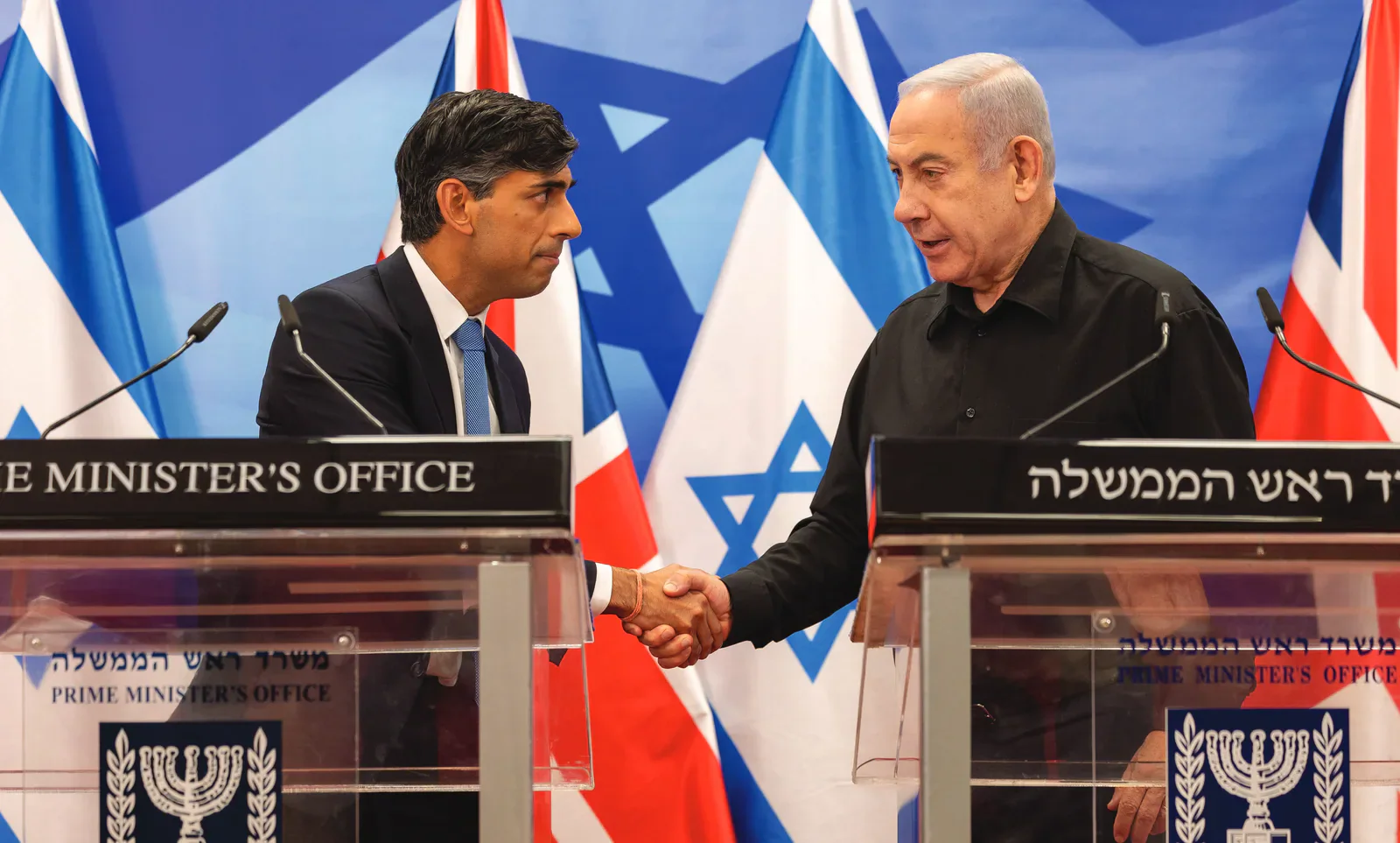
British fighter jets shot down “a number of drones” fired at Israel from Iran, Prime Minister Rishi Sunak said.
This makes the UK one of the several countries which helped shoot down “nearly all” of Iran’s drones and missiles, according to President Joe Biden; that helped counter Iran’s attack.
Mr Sunak condemned Iran’s “reckless attack”, joining the G7 leaders in issuing a statement which expressed “full solidarity and support to Israel” and accused Iran of furthering the “destabilisation of the region” and risking “provoking an uncontrollable regional escalation”.
UK Foreign Secretary Lord Cameron was one of the first non-Israeli politicians to admit that a military response is inevitable, stating that it is clear Israel is “making a decision to act”, but hoped that Israel would do it in a way “that does as little to escalate this as possible”.
Labour leader Sir Keir Starmer also condemned Iran’s “decision to subject Israelis to these unacceptable attacks”, claiming that “yet again, Iran has chosen a different, dangerous path”.
Iran directly targeted Israeli soil for the first time by firing hundreds of drones and missiles; making it the single largest drone attack ever carried out by any country. The attack was in response to the April 1 Israeli strike on the Iranian consulate in Damascus that killed seven members of the Islamic Revolutionary Guard Corps (IRGC), a multiservice primary branch of the Iranian Armed Forces.
According to United Nations (UN) experts, Israel’s initial attack on April 1 violated the prohibition on the use of armed force against both Iran and Syria under Article 2(4) of the UN Charter. These experts also noted that Israel did not seem to be exercising self-defence under Article 51 of the UN Charter, despite depending heavily on it since it started its military response to the October 7 Hamas attack, because it presented no evidence that Iran was directly committing an “armed attack” on Israel or sending non-state armed groups to attack it.
Similarly, despite seemingly having a more plausible Article 51 argument at the UN Security Council, the experts noted that Iran had no right of self-defence on April 13 because Israel’s initial attack concluded on April 1 and self-defence is only lawful where it is necessary to stop a continuing armed attack. “These retaliatory strikes violate state sovereignty and represent a dangerous escalation of conflict in a region already on a knife-edge”, the experts warned.
The unprecedented Iranian attacks may have briefly shifted the world’s attention from the deaths of over 34,000 people in the Gaza strip. Israel’s ongoing military offensive on Gaza since the October 7 Hamas attack has now lasted over six months and has seen Gaza haunted by mass graves, debilitated hospitals, near total destruction of infrastructure, and hampered aid agencies.
Since Israel’s war on Gaza, 62% of all houses in the besieged territory have been damaged or destroyed according to the UN Relief and Work Agency for Palestine Refugees in the Near East (UNRWA). In a report published on March 18 by the Integrated Food Security Phase Classification (IPC), the world’s hunger watchdog, 1.1 million people are living through catastrophic food insecurity.
With student demonstrations being held worldwide in support of Gaza, and four UN Security Council resolutions calling for a ceasefire being vetoed, many are left wondering whether there will ever be an end to Israel’s relentless attack on the Gaza strip.