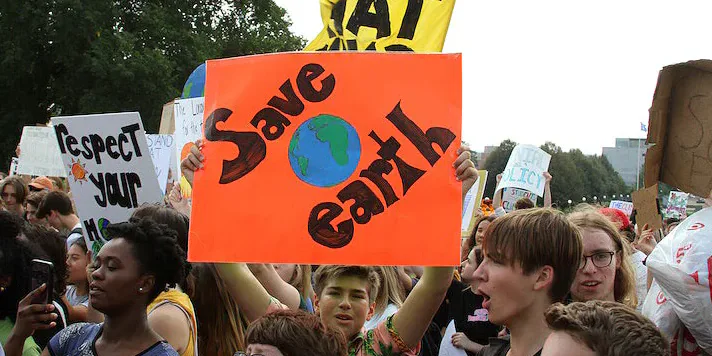
Increasing temperatures and changing weather patterns and the continued usage of fossil fuels are only some of the factors that has led to humanity facing its greatest challenge yet; climate change.
Scientists say that we have until 2030 before the effects of climate change will become non-reversible. In a series of UN reports, scientists and governments have agreed that limiting global temperature rises to 1.5 degrees will help avoid the worst impacts of climate change. Yet, the policies in place currently predict that the actual rise of temperature will be 2.8 degrees by the end of the century.
The climate crisis continues to be a topic of worry amongst young people, with over 70% of young people said to be worried or very worried about climate change.
With activists such as Greta Thunberg, young people are leading the charge against the climate crisis, urging actions from governments and industry.
The Importance of Climate Literacy
Article 6 of the United Nations Framework Convention on Climate Change (UNFCCC) “seeks to reduce the impact of climate change by enabling society to be part of the solution”. This article imposes a responsibility on countries to establish educational programs and campaigns aimed at educating the younger generation about the severe consequences of rapid climate change. This concept of ‘climate literacy’ should range from primary schools to universities.
The significance of climate literacy cannot be overstated. Education is the key to combating climate change as it not only raises awareness but also inspires young people to adopt new attitudes which can lead to well-informed and environmentally conscious decisions. The United Nations Educational, Scientific and Cultural Organisation (UNESCO) has established the Climate Change Education for Sustainable Development program to increase climate literacy and alert the public to the risks posed by global warming. This program has been expanded to include several educational initiatives, including the Action for Climate Empowerment and the Global Action Programme (GAP).
The future-focused outlook of the youth makes them the perfect champions of climate literacy in educational institutions. This is why educational institutions must adapt and respond to this global crisis.
What solutions do students want?
Students in the UK have noted that their institutions are working towards carbon neutrality and achieving net zero emissions, as mandated by the government. However, they feel that more needs to be done than simply public awareness campaigns.
One student said: “We should move forward from acknowledging the global threat, practical steps should be taken to maximise public participation”.
When asked about the role of climate literacy in combating climate change, a student responded, “education is hope, it empowers everyone”.
Some students proposed solutions such as a complete campus ban on single-use plastics. Gabby said, “the university should disassociate itself from any company that contributes negatively to climate change”.
Jibran recommended “introducing financial penalties for students who fail to adhere to the university’s climate change policy or initiating environmental education as a separate module of equal importance in the curriculum to promote climate literacy”.
Aban shared his contributions, “I have reduced the number of flights I used to take annually. I think every step counts, students can take small steps and give our best in our capacity. We need to feel a personal connection”.
Another student said, “we need to come together, think as a community, recognise our responsibility and actively participate to mitigate this global challenge”.
Students who have recognised the significant impact of education on climate change are advocating for action to be taken to tackle climate change as a global threat.
In conclusion, educational institutions have a crucial role to play in the fight against climate change. Educational institutions need to step up their efforts to combat this global crisis. Climate literacy must be given due importance. It helps the younger generation to be equipped with the knowledge and understanding necessary to make informed and sustainable decisions. By elevating the importance of this education and making it a central part of the curriculum, we can inspire hope and create a future that is cleaner, healthier, and more sustainable for all. The time for action is now, and it is imperative that educational institutions work together in a systematic and collaborative manner to tackle this pressing global crisis.
With determination, foresight, and education, we can secure a better tomorrow for generations to come.
More photographs