
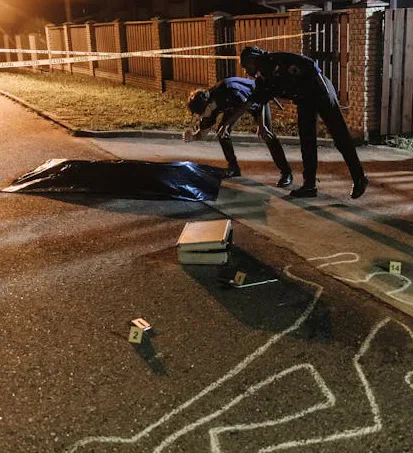
AGREE
Have you noticed the rapid rise of true crime stories in the media? From informative documentaries on Netflix, dramatic adaptations on TV, and even references to killers in song lyrics, our generation cannot seem to stay away from the gory details of murderers and their motives. Some view this fixation on such horrible events as insensitive to victims of violent crimes and their families, however, this article will argue that there is a place for certain types of true crime in our media.
So why do people enjoy it? I myself cannot get enough of the genre, some of my favourites of late being Netflix’s Worst Roommate ever and Don't F*ck with Cats for their victim-focused approach and creative retelling of events. When questioned about why they enjoy true crime, some point to feelings of adrenaline they get from true crime stories, or morbid curiosity.
Others suggest that watching shows where criminals are punished by the legal system helps satiate our desire for justice, in a world where this is sometimes hard to believe in. In my opinion, the main reason why people enjoy true crime so much, is that in this world there are so many unknowns. These horrible people, who commit these atrocities that we cannot understand, make us feel scared.
Therefore, to feel more in control and to gain knowledge about the motives of these criminals, we continue to engage with true crime stories. However, there are definitely examples of true crime in the media which are insensitive and have left me feeling disgusted by their creators. One example of this is 2022's Dahmerstarring sex symbol Evan Peters.
His uncanny portrayal of the notorious serial killer was unsettling to say the least, and choosing to cast someone considered conventionally attractive was a strange choice to me, as it led to people fetishising Jeffrey Dahmer which should never be the aim of true crime entertainment. Dahmer, among many other examples, glorifies the actions of the killer, putting him on a pedestal, and in turn takes the attention away from the deaths of innocent people, deplatforming the families and those who were close to the victims. Despite examples such as Dahmer, I believe there are some examples of positive true crime.
For example, Keep Sweet, Pray and Obey, as well as examples of untraditional true crime, like The Program and Hell Camp, in my opinion successfully provide those affected by abuse a positive and free space to recount the events that they have survived. What these docuseries have in common, is that they are victim-focused, and aim to raise awareness about the abuse that victims have survived. Complete with content warnings and resources that those watching can use, the stories told are not sensationalised, and allow the victims to speak their truth from start to finish.
Whether you hate true crime or can't get enough of it, I hope my article has proved to you that there is a space for certain types of true crime in our media.
DISAGREE
True crime as a genre has absolutely exploded in popularity over the past decade. Documentaries, films, books, even TikToks exploring the deaths of people at the hands of murderers have become an absolute monolith on streaming platforms and social media.
But seeing so much content relating to the deaths of primarily innocent people has always seemed so odd to me. Creating content based on real murders is absolutely horrifying in theory—yet so many people are drawn to it without even considering its grim nature. The absolute core of true crime feels rotten.
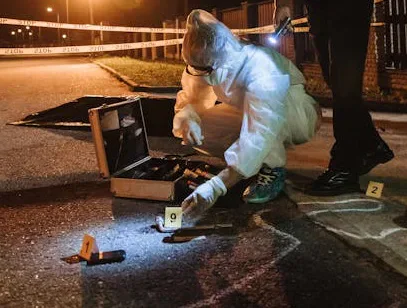
Monetising the deaths of innocent people? That should be an absolutely disgusting idea to most people—but it isn’t. People flock, money in hand, to streaming sites to watch documentaries based on deaths, showing huge companies like Netflix that this genre is an absolute money-making machine.
And so, more documentaries are made, more money is made, and more deaths are unearthed, just to be shown off to the world. An argument could be made that if some of the money made from these documentaries was given to the families of the victims, that there’s some benefit from the genre. But not even this happens.
Probably the most popular example of this happening is the 2022 Netflix recreation of Jeffrey Dahmer’s murders, Dahmer. A family member of one of the victims, Rita Isabell, spoke out, saying that neither her family, nor any of the others, received any sort of compensation from the Netflix series. So, the argument of compensation being given essentially becomes moot, in the face of corporate greed.
Furthermore, so many people in online spaces fetishise and glorify these murders and the serial killers who committed them. Easily the most obvious case of this occurring is Ted Bundy. During his trial in the 80s, many people commented on his attractiveness and this was exacerbated by his portrayal by Zac Efron in 2019’s Extremely Wicked, Shockingly Evil and Vile.
During this time, the internet was flooded by people talking about Bundy’s attractiveness—with no mention of his crimes! This is just one example, but the fetishisation of serial killers is absolutely aggravated by the media conglomerates who fund these documentaries and films, in order to manipulate their audience into consuming this content. An audience which consists of 80% women.
Desensitisation is another incredibly important issue that comes with consuming true crime documentaries. Naturally, if you’re constantly watching recreations of murder, torture, and rape, you become apathetic towards these horrific crimes within the real world. Instead of viewing these victims as individual deaths, you group them into a category of “Oh, just another death”.
As the old adage goes: “One death is a tragedy, a hundred deaths is a statistic.” I understand the justification that some people use is that some of these true crime documentaries focus on the victims, making the viewer feel empathetic towards their murder. But is that really enough if you’re watching hundreds of these documentaries? If you can’t tell, I’m not the biggest fan of true crime.
In truth, I can barely see the pull it has on so many people. But there’s some points that I can absolutely concede, like the morbid curiosity aspect. It just isn’t for me!