
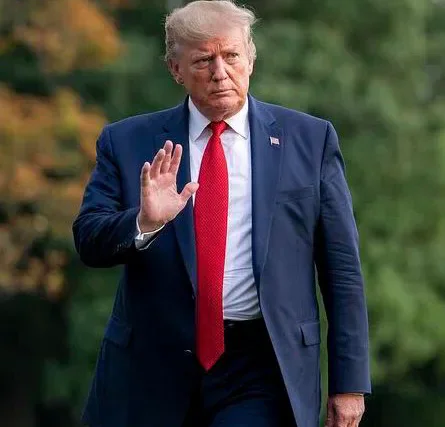
In a seismic shift for American politics, Donald Trump’s return to the presidency has reshaped the nation’s political landscape, sweeping in a victory that few predicted and many underestimated. While Harris betted on women’s rights and the importance of preserving democracy, Trump put all his money on immigration and the economy, and he won big as a result. Voters the Democrats also assumed they could rely on—women, Latinos, and Black voters—did not show up for them as much as expected, and in fact there was a shift to Trump amongst almost every demographic. However, it is important to highlight that this shift is not necessarily an endorsement of Trumpism, but rather a clear rejection of the incumbent party, and although Trump has a broad coalition of support, it’s a very fragile majority whose support hinges on his ability to make America “great again”. Looking at his manifesto or listening to the overwhelming majority of economists, it becomes evident that this is looking unlikely.
Trump recently appointed multi-billionaire Elon Musk to lead a new “Department of Government Efficiency”, with Musk claiming he will be able to cut government spending by a third (“at least $2 trillion”). Experts warn such savings cannot be made without severe implications, with concerns over the impact on social security and defence spending. Trump has also promised vaccine denier Robert F Kennedy Jr a significant role in healthcare. In an interview with Tucker Carlson, Trump said Kennedy “can do whatever he wants”, suggesting that he would like him to have his way with potentially hazardous restrictions on pesticides and vaccines. Kennedy also said Trump would push to remove fluoride from drinking water, despite the abundance of scientific evidence that this would have extremely detrimental consequences for public health.
Speaking of healthcare, Trump has been reiterating since 2015 that he wants to repeal the Affordable Care Act, but he has still not proposed a replacement in nine years, instead commenting in September that he has “concepts of a plan”. Vice PresidentElect JD Vance has also voiced his desire to cut insurance costs for fit and healthy young people at the expense of older people or those with pre-existing health conditions. They are all currently shielded from risk-based pricing under Obamacare, but under Trump, this protection could be removed.
Trump also wants to make big moves in education, which primarily involves abolishing the Department of Education, giving states greater control of schooling. The department plays a crucial role in making education access more equitable nationwide by providing grants and funding for low-income and disabled students. Trump also proposes taking over accreditation processes for colleges, a move he describes as his “secret weapon” against the “Marxist maniacs and lunatics” as he vowed to root out alleged left-wing ideological bias in American universities.
Additionally, he has promised to pardon a “large portion” of the more than 1,000 people arrested and convicted for the attack against the Capitol on January 6th, praising them as “patriots”. He also plans to reissue his 2020 Executive Order which will restore his ability to dismiss civil servants— a power he said he will “wield very aggressively”. This includes the Justice Department and the FBI who have both been cited as targets. As scholars at the American Enterprise Institute have warned, Trump has made it clear in countless ways that he expects “total loyalty—from cabinet secretaries down to the most junior agency employees”. Although we do not know precisely what Trump will do in his second term, there is one thing of which we can be certain: things are going to change.
Trump didn’t expect to win in 2016, and his first term was consequently marked by unorganised chaos, constant staff churn, whimsical decisionmaking, and feuds with government officials over implementation of his agenda. But Trump has had four years to prepare this time, and he has cultivated a collection of loyal, hardcore MAGA supporters to assist him in office. Moderate Republican figures who previously acted as guardrails against many of his extreme ideas have abandoned him, including his national security adviser, attorney general, national intelligence adviser, and strings of chiefs of staff. The Republican Party is now entirely his, and he has been pardoned and supported by the popular vote, so there really is nothing stopping him.
As experts and commentators dissect the results and Democrats scramble to rebuild, one fact is glaringly obvious: 2016 was not an aberration. With his loyal base more emboldened than ever and the Republican Party reshaped in his image, Trump’s America has arrived—not as a deviation, but as a defining feature of the nation’s political identity. Where this path leads, only time will tell.