
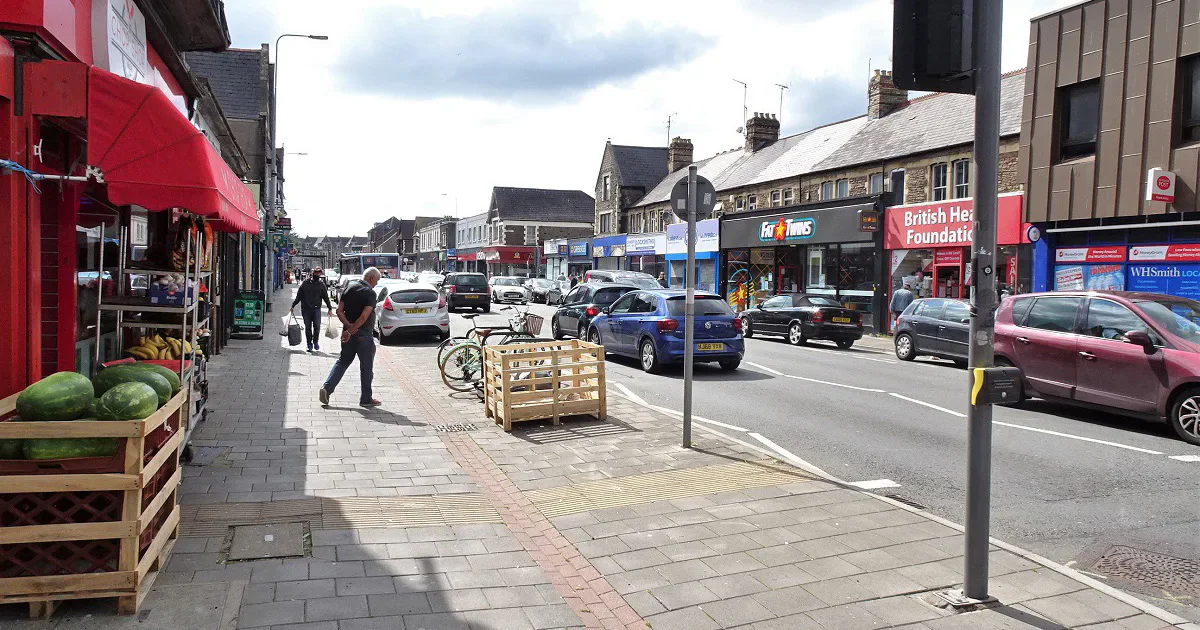
Cathays and Roath are the two most common places for students in Cardiff to move to after finishing their first year of university. But how safe are these places to live?
Cathays is commonly known as one of the most crime-filled student neighbourhoods in the UK, with a recent study based on police crime data showing that 32.5 crimes occur per 100 people in Cathays. The Sun reported in August 2025 that Cathays was “The most crime-ridden university neighbourhood” with first hand accounts from university students living in Cathays telling their first-hand experiences with crime.
But how bad is Cathays for crime really?
In Cathays last year, according to South Wales Police there were 6,949 crimes reported with the most common type of crime in December 2025 being violence and sexual offences with 235 reports. Compared to the 2,251 crimes reported in Roath / Plasnewydd with the most common type of crime also being violence and sexual offences with 52 reports. However, crime in Cathays is decreasing having lowered 1.5% between 2024 and 2025.
An FOI request to South Wales Police revealed that Albany Road is the road in Cathays with the most reported crimes between January 2024 and December 2025. With the main type of crime in this street being “Theft and Handling”. Albany Road, the main road into Roath connects Cathays to Roath and is named twice on the top five roads with reported crime. The top five roads with most reported crime are Albany Road, Excelsior Road, Park Place and Salisbury Road.
When asked what the most common types of crime occur in Cathays and Roath, South Wales Police responded with: Shoplifting, Public Order Offences, Violence without injury, Vehicle offences, Stalking & Harassment.
These statistics and facts can seem just like numbers but the crime happening in Cathays is directly impacting a lot of students in their day-to-day life. A female Cardiff University Student told Gair Rhydd about her experience of being harassed by a group of girls and later “attacked by one of them on her way home from a night out” on Salisbury Road.
Another Cardiff University student, Leah Holland recounted her experience of having “two young lads attempting to mug me” after she was walking home from an evening out a couple of years ago. “I was walking past Misfits when two young boys in balaclavas asked me for the time... I quickly put my phone away and they grabbed my shoulder bag and attempted to drag me into the road... an uber stopped in front of me and didn’t stop to help just watched as I screamed and cried for help... I thought they had taken my bag, but it turned out they dropped it when I tried to fight back.” The police arrived around five minutes later and drove her home and offered to take a statement.
Students may be wondering what are South Wales Police doing to help directly prevent further crimes and keep our student areas safe? The current strategies they are implementing include Designing Out Crime Officers (DOCOs) to work with architects, developers and local authority planners to build-in “proven prevention techniques at the planning stage to new buildings and major refurbishments”. More specific activities such as conducting Environmental Visual Assessments to help improve visibility and lighting in student areas to help prevent further crimes are taking place. As well as this, South Wales Police also advise students to use the HollieGuard app which is a safety app that updates your location every five seconds and acts as a “personal alarm, deterrent and evidence gatherer”.
But is this enough?
As a student in Cardiff hearing other student’s experiences and seeing the statistics, it makes one question whether enough is being done to protect the students. Students make up a large chunk of the population in Cardiff where Cardiff is home to four universities: Cardiff University, Cardiff Metropolitan University, University of South Wales and The Royal Welsh College of Music & Drama. With roughly 62,000 students across these four universities, the students make up 16% of Cardiff’s population and we deserve to feel safe in the city we chose to live in during this period of our lives.