
Whilst Leave voters celebrated the supposed victorious return of ‘border control’ when they voted for Brexit in 2016, many young people on both sides of the Channel were devastated to hear that the EU’s free movement rules would be put to an end.
These rules permit any EU citizen the freedom to live and work in another EU country—a luxury that many Brits, especially students and young people, regularly made use of. This opportunity was subsequently crushed by Brexit, but after 8 long years, the EU has now approached the government with a new proposal that could see partial restoration of freedom.
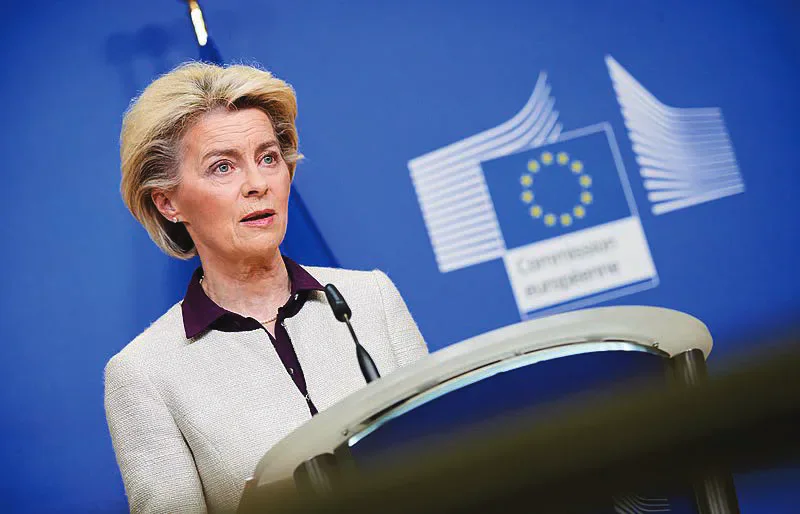
The ‘youth mobility scheme’ that has been proposed by European Commission President Ursula von der Leyen is aimed at 18–30 year olds in the UK. It would see the abolishment of restrictions for British citizens who wish to work, study, train, or volunteer in any EU country. However, it is not a complete return of the freedom of movement, as it will require some bureaucratic regulations, such as visas and insurance, as well as being capped at a four-year time limit, but there will be no limit on the total number of individuals that could use the scheme.
However, it is important to note that this is not a one-way deal, and the same freedom to come and work or study here will apply to the citizens of the 27 EU countries. The proposal is also requesting some easing of restrictions on the other side, such as the lowering of tuition fees for EU citizens from the extortionate £22,000 a year they currently pay to the £9,250 that UK residents are charged. Additionally, it is asking that EU citizens aged 18–30 should not be required to pay the annual NHS levy which costs £776 for students and £1,035 for workers.
The European Commission has championed this proposal as a way of opening up opportunities for young people to “experience life on the other side of the Channel” and receive the benefits of “youth, cultural, educational, research and training exchanges”.
Discussing the new proposal, Ursula von der Leyen said: “The topic of youth mobility is in both our interests, because the more we have youth mobility on both sides of the Channel, the more we increase the probability we will be on good terms because the next generation knows each other well.”
However, the offer has been rejected by Rishi Sunak. Instead, Downing Street said it would prefer to create its own agreement on a country-by-country basis.
Anand Menon, a professor at King’s College London, explained that the EU are afraid that member states may follow suit and start creating their own “bilateral deals” which threatens the existence of the EU, especially in the context of rising Euroscepticism in countries such as Italy and Hungary. The EU argues that this risks “differential treatment” of EU citizens and instead there should be a bloc-wide deal to ensure everyone is “treated equally”.
When asked if a Labour government would be interested in accepting the proposal, a spokesperson commented that there were “no plans for a youth mobility scheme”.
The Liberal Democrat’s leader, Ed Davies, condemned the two main parties’ decline of this new deal, saying: “It would be a much needed boost to our economy, especially hospitality and tourism; it would offer great new opportunities to young British people to work abroad; and it would be a crucial step towards fixing our broken relationship with Europe.”
Unsurprisingly, statistics show that the number of students and temporary workers from the EU has drastically fallen since Brexit, and this reduction has left many restaurants and businesses short of the steady stream of workers they once heavily relied on.
Many pro-EU groups have also spoken out on the issue, with campaign group ‘Stay European’ stating: “Rishi Sunak should realise that his government is hated by young people and the EU is offering him a lifeline. Labour should not dismiss this scheme because they will need both the support of young people to win the election and the hard work of young Europeans to implement their economic programme in office.”
The UK already has a two-year youth mobility scheme visa in place, but this is not accessible to EU residents and currently only allows applicants from 10 countries, including Australia and Canada. It is well known that the British government are interested in opening this opportunity up for citizens in France, as well as a few other EU member states, but clearly there is no appetite from the government or the opposition to open this up to everyone. As evident with the Brexit negotiations, it appears that the British government just want to cherry-pick the nationalities they deem acceptable enough to come over here.