
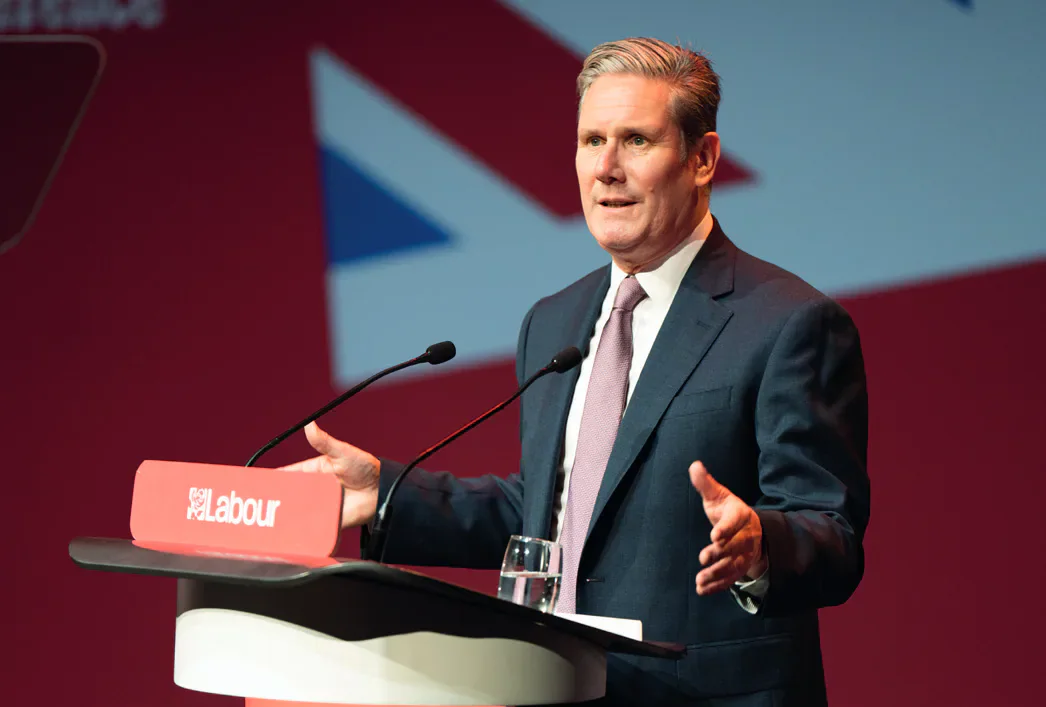
Labour leader Sir Keir Starmer came under fire last month at a centre-left conference in Canada where he remarked on stage that he wouldn’t want to “diverge from the EU” if he is elected as prime minister in the next election.
The comment came as Sir Keir reflected on the relationship between the UK and EU and the conflict that has arisen between the two since the Brexit referendum.
He cited that the main source of this dissension is the fact that the UK “wants to diverge and do different things to the rest of our EU partners.” He went on to emphasise how the more the UK and Brussels “share a future together”, the less friction there will be between the two.
His seemingly controversial comments triggered a sea of attack from the Tories, with Foreign Secretary James Cleverly claiming that the use of the word ‘diverge’ in Starmers speech indicates that a Labour government would “want to rejoin the EU in all but name”. Michael Gove also affirmed that his speech revealed “the real Keir Starmer” and his wishes would reduce the UK’s Brexit “power”.
However, Starmer has made it clear that a Labour government would not rejoin the customs union or single market - the two biggest components of the Brexit referendum. He also stated that the party does not support ‘dynamic alignment’ - the idea that the UK would blindly follow evolving EU rules in an area indefinitely - and emphasised how any decision to align would be discussed and decided formally in parliament.
Many Brexiteers have purported that one of the presiding benefits of leaving the European Union is our ability to change regulations in areas which were previously legislated by them, such as product standards or the environment.
However, several trade unions and environmentalists have warned against diverging as they emphasise the importance of keeping UK standards high and many businesses have expressed their concerns for the extra costs that made me entail from such divergence.
Critics have also questioned the necessity of even diverging from EU standards in the first place. Earlier this month, it was reported that the UK had failed to ban 36 harmful pesticides that are now restricted from use in the EU. This is hardly a glamorous advertisement for Brexit.
Labour’s shadow chancellor, Rachel Reeves, spoke of Starmers statement, stating how “it shouldn’t come as a surprise to people that an incoming Labour government doesn’t want to dilute workers’ rights, environmental protections or food standards.”
It shouldn’t come as a surprise [...] that an incoming Labour government doesn’t want to dilute workers’ rights, environmental protections or food standards.”
Starmer has assured the public that he would seek a “much better” Brexit deal then the one we currently have, although there has been no formal details announced yet to explain what this may entail.
His speech at the Canada conference concluded that there is “a lot more common ground than you might think”, and “the more we share values, the more we share a future together”.
Starmer’s ‘pro-EU’ stance endured even further scrutiny from the Conservatives following his announcement last month that he would seek an EU-wide returns agreement for aslyum seekers to deal with the small boats problem.
The deal would involve a “quid pro quo” where the UK would accept a quota of migrants from the EU bloc in return for sending back illegal migrants, with those who already have family here in the UK being prioritised.
His controversial comments triggered a sea of attack from the Tories, including the Party Chairman, Greg Hands, who tweeted: “Labour plans opening the doors to 100,000 extra illegal migrants from the EU every year. Labour means unlimited and uncontrolled immigration.”
However, this figure has been denounced as infactual and misleading as there have been no formal discussions with the EU about how many migrants the UK might take and Labour has not revealed what the deal would involve.
Senior Conservatives who have spread this false figure, including the Prime Minister Rishi Sunak himself, have consequently been accused by the ‘Full Fact’ charity (who monitor factual accuracy of public political statements) for spreading “misleading claims” and “damaging our democracy”.