
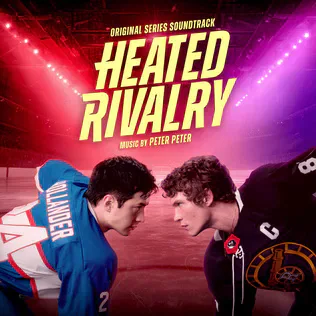
Heated Rivalry became the unexpected smash hit of 2025, yet it has maintained an incredible level of success well into the new year. This month, the Canadian TV show surpassed 10.6 million viewers in the US alone. One in three viewers have rewatched the entire season, while one in ten have watched it five or more times. Everyone from the Ottawa Senators NHL team to the Canadian government is selling merch. But why has the six-episode hockey romance rocketed to extreme success overnight? More importantly, is it actually worth watching?
Heated in the bedroom: the role of sexuality
It’s likely you have heard of the show’s reputation as a “gay porn show”. Yes, the show is incredibly erotic. The initial bond between Shane Hollander (Hudson Williams) and Ilya Rozanov (Connor Storrie) is based on sexual attraction, then later blossoms into a tender romance.
However, it isn’t exactly Fifty Shades of Grey. What we see is pretty vanilla gay sex. I sense the aversion to HR’s sensuality is due to homophobia.
While Bridgerton (2020 –) features more sex scenes, it isn’t dismissed as “pornographic”. And, despite full frontal nudity becoming commonplace on TV (The White Lotus, Euphoria), it doesn’t feature in the show. In fact, the overblown reaction to HR is likely its contrast to the average (sexless) queer romance we see on TV, such as Heartstopper (2022–2024) or Stranger Things (2016–2025).
Gay sex scenes are labelled as “shocking” or “over the top”, while heterosexual equivalents are given a pass. Furthermore, the sex in HR is not gratuitous. It is crucial to the self-discovery, vulnerability, and intimacy explored in the show.
The sex scenes tell us about the characters, their bond, and how they develop over time. It isn’t just “gay porn”.
Homosexuality, masculinity, and identity
While the gay romance and sex scenes might be what you’ve heard about, the main theme of the show is undoubtedly identity.
In the hyper-masculine sport of ice hockey, Shane struggles to accept his homosexuality. There has never been an openly gay National Hockey League (NHL) player, which makes him feel excluded and pressured to hide.
In contrast, Ilya is comfortable in his bisexuality, but not used to love due to his troubled home life. His father is abusive, his brother uses him as a cash cow, and his mother lost her life to suicide. It isn’t difficult to link his toxic family with his status as a Russian athlete, desperate to escape the country he hates.
HR has been criticised for including a Russian protagonist in the show without condemning the genocide in Ukraine.
While this is disappointing, HR is heavily critical of Russia, didn’t shoot in Russia, and did not hire Russian actors. It would’ve been difficult to adapt the source material (Rachel Reid’s 2019 book of the same name) without this aspect, as the Russian state looms as an unspoken threat throughout the story.
As well as identity, HR focuses on masculinity, at a time when toxic masculinity has never been so prominent in our culture.
Despite being at the top of his field, Shane is ultimately an outsider, as both his sexuality and Japanese-Canadian status threaten his perceived masculinity. To compensate, he needs to overperform on the ice. The NHL has a huge problem with hazing, homophobia, and having to be “manly”, which HR holds a mirror up to.
As the later books focus on bullying and sexual assault, it is likely this theme will be explored further.
It would be ridiculous to say love solves all their problems. As Williams pointed out, the season finale is a bittersweet ending rather than a happy one.
But seeing the characters grow into better and more realised people over the course of six years is rewarding. At last, they are truly themselves, in private if not in public.
We have been overdue an authentic and unapologetically queer romance story
Heated Rivalry makes television history
The success of HR may seem like it came out of nowhere if you weren’t paying attention. In truth, Reid’s books had a significant fanbase, which creator Jacob Tierney was determined to stay loyal to. Interestingly, the majority of dialogue between the main characters is lifted directly from the eponymous book. Tierney and crew have done excellent work to flesh out the wider world around Shane and Ilya, making it feel like more than a backdrop for the story.
However, the show has attracted millions who were unfamiliar with the source material.
Firstly, this was a project of love, not profit, with Tierney trying to get HR off the ground for years. With a budget of $3.6m USD per episode—for scale, The Pitt (2025–) has $4 to $5m—this was not a Hollywood production.
Robbie GK (Kip Grady) revealed he was sleeping on a deflated air mattress at a relative’s house while filming. Everyone involved in HR was invested purely in bringing the story to life and did not anticipate the show’s success at all.
Secondly, the use of unknown actors has to be acknowledged.
Previously, Storrie had minor roles in movies while Williams, who graduated performing arts school in 2020, struggled to get his career off the ground. Both were working as waiters and they expected to continue after the show’s release. Needless to say, they give incredible and emotional performances, which wouldn’t have been as impactful if done by, say, Jacob Elordi.
Storrie has been applauded, in particular, for learning Russian and maintaining a believable accent for the whole show. Meanwhile, Williams portrays the most accurate autistic character in years.
Thirdly, HR was not a “binge show”.
Instead, the episodes were released weekly, allowing the hype to build gradually and naturally. We know from Severance (2022–) and Succession (2018–2023) how valuable this distribution method can be. HBO said the success was due to “word of mouth”, and it’s no wonder it spread throughout online spaces quickly.
We have been overdue an authentic and unapologetically queer romance story for years now and Tierney, who is gay himself, understood how to deliver what the LGBTQ+ community has been waiting for.
Is it worth watching?
Although I would advocate HR is for everyone, it hits differently if you know what it’s like to be in the closet.
It is definitely a love letter to hockey, LGTBQ+ fans, and (particularly) those who fall into both camps. There’s even a small role played by the first transgender hockey player, Harrison Browne. But it’s also for anyone who feels like an outsider, especially if you feel it makes you impossible to love.
Heated Rivalry is for people stuck on the bench, watching everybody else play.