
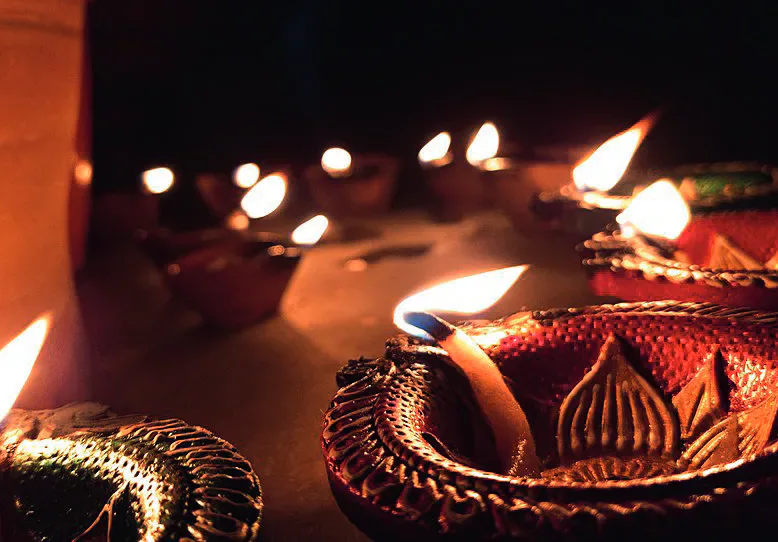
With the festival of Diwali coming up imminently, many communities are celebrating this significant date. Hindus, Sikhs, Jains and Newar Buddhists all recognise the occasion, with each faith having their own individual histories and beliefs connected to Diwali, but with the same underlying themes presiding over the holiday. These themes include the victory of light over darkness, good over evil and knowledge over ignorance.
For Hindus, Diwali celebrates the return of King Rama to Ayodhya after his victory over Ravana and his 14-year exile. The Hindu goddess of Wealth, Lakshmi, is also celebrated as she is the bringer of the blessings for the celebration of the New Year. For Sikhs, the sixth Guru, Hargobind Singh, was released from prison on Diwali in 1619, as well as the day the foundation stone of the Golden Temple at Amritsar was laid in 1577. For Jains, Diwali is the day that Lord Mahavira reached spiritual awakening in 527BC.
It is clear, therefore, that there is not just a rich history connected to the festival, but also that its significance spreads throughout a range of cultures and religious traditions. Whilst this is deeply important for many communities, the question must be asked – how is this relevant to people in the 21st century celebrating Diwali?
Apart from religious and spiritual importance, the lessons that Diwali teaches are relevant to all audiences and serve as genuinely good practice for how to live. The emphasis on the victory of good over evil, light over darkness and knowledge over ignorance are lessons that we can take forward in different ways into our day to day lives. For example, the significance of knowledge over ignorance would remind us that before we speak on an issue, we would do well to be educated about the topic prior to the discussion. The importance of good over evil reminds us that being a good person is the most powerful thing we can do in this world. There are many other applications of this, but the New Year is a good time to start fresh, refocus, and reinvent oneself in an image that is kinder, more knowledgeable and more optimistic.
Outside of the deeper meanings and the lessons we can take from Diwali, in a non-religious way, there are other things we can take away from this celebration. In some ways we do not have to learn anything at all because if nothing else, it acts as a way to bring families together to share food, culture, and overall bond over shared traditions that have been happening for centuries. Divas are lit, rangoli patterns are created, fireworks are set off, and food is shared between generations of family.