
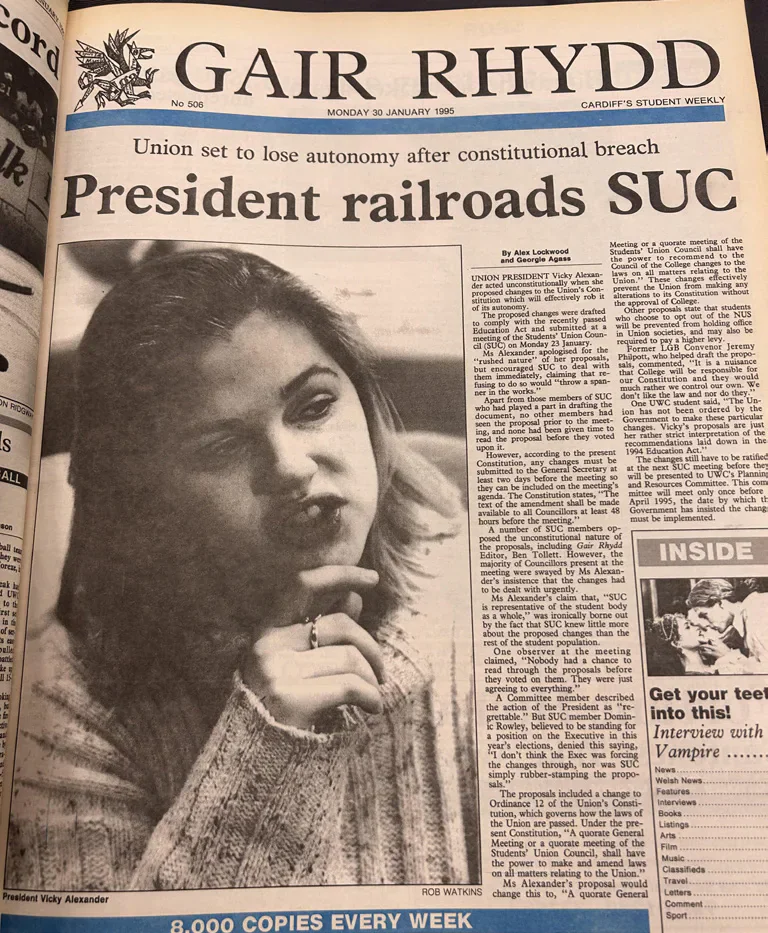
While to many of us today, Victoria Starmer is the woman behind our current prime minister, she hasn’t always been hidden in the political shadows. During her time at Cardiff University in the 1990s, she often raised her voice and took strong stances for the welfare of her peers. However, her time as president wasn’t exactly smooth sailing, with issues surrounding censorship of Gair Rhydd casting a shadow over her time as president.
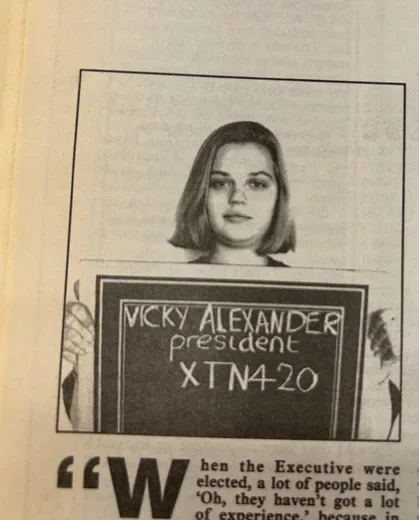
Victoria Starmer, formally Victoria Alexander, became the student union president in 1994. She actively got involved in politics while studying law and sociology, campaigning against government cuts to student grants. Often addressing her peers regarding the cuts of these grants, she also discussed student hardships such as loans, safe sex practices, and budgeting.
Alexander was described as a strong campaigner, who cared a lot about the student body and strived to make politics accessible to everyone. While Alexander was a great advocate and role model during her time as union president, it wasn’t all plain sailing. As the Gair Rhydd archives attest, during her time in post, her relationship with this publication was turbulent to say the least.
Despite stating in an interview with Gair Rhydd “I don’t believe in censorship”, issues started to arise surrounding how freedom of speech was being impacted by executives and the president, with writers for the newspaper being excluded from meetings. During her tenure an investigation conducted Gair Rhydd stated that “the union was unfit to run its current facilities and should therefore not be given the opportunity to extend its influence”. Similarly, the then editor called out college officials for being “neither professional nor proper”.
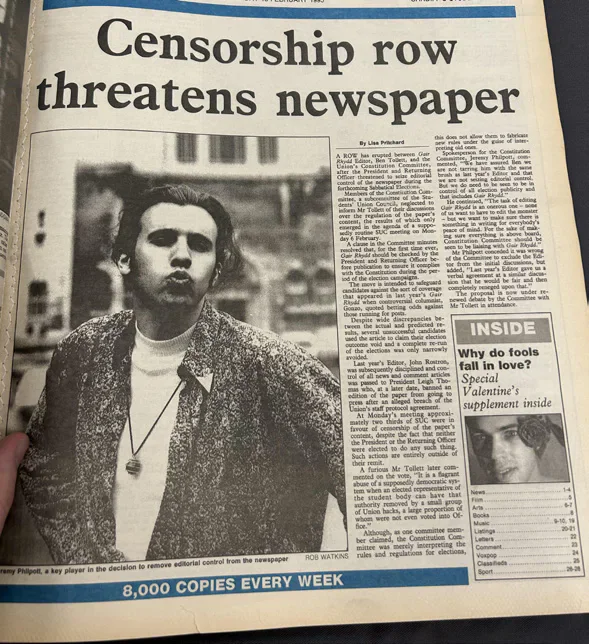
This was not the only time Gair Rhydd and Vicky Alexander didn’t see eye-to-eye. In the run up to the elections, Alexander threatened to seize editorial control of the newspaper regarding all articles related to the elections. These regulations were not discussed with then editor Ben Tollet, and for the first time ever, Gair Rhydd’s content would be checked by the president and returning officer before publication to “compile with the constitution during the period of the election campaigns”.
This move was aimed to combat incidents like the year prior when a writer quoted betting against those running for post. In light of this, two thirds of the SUC were in favour of censoring the paper, which Gair Rhydd argued was beyond Alexander’s authority. Gair Rhydd writers described Alexander and the committee as having their “own little private party”; which they alleged was impacting the writers on the paper.
One writer regarding the president proofing all election related articles stated “it is a student newspaper, not a national daily. It is written by students, for students, not by the Exec”. Gair Rhydd weren’t silent and put up a fight, with an opinion piece stating “this is blatant censorship.
A power kick for members of the executive”. Gair Rhydd frequently addressed the issue of how the union was run and the power this had over the paper: “Vicky Alexander... is that ‘President’ or ‘Big Brother?’” wrote one student in a letter to the editor. Gair Rhydd often called out the disorganised leadership of the union throughout Victoria’s time as president, such as addressing union executives not completing reports according to deadlines.
Furthermore, Alexander was accused by Gair Rhydd as acting unconstitutionally when she proposed changes to the union without discussing these changes with the rest of the executives. In a Gair Rhydd investigation, a writer stated, “the union was unfit to run its current facilities and should therefore not be given the opportunity to extend its influence”. This alongside the other examples spotlight several issues regarding ceasing control from Alexander in her time as president.
While Vicky Alexander strove for change and to better the university, it came at a cost to this newspaper, which has benefitted students for generations. The censorship of Gair Rhydd rocked the very foundations it was built on; to deliver free speech and accurate information to the student body. Despite Alexander’s achievements during her time as president, the relationship between the union member and Gair Rhydd became almost irreparable.