
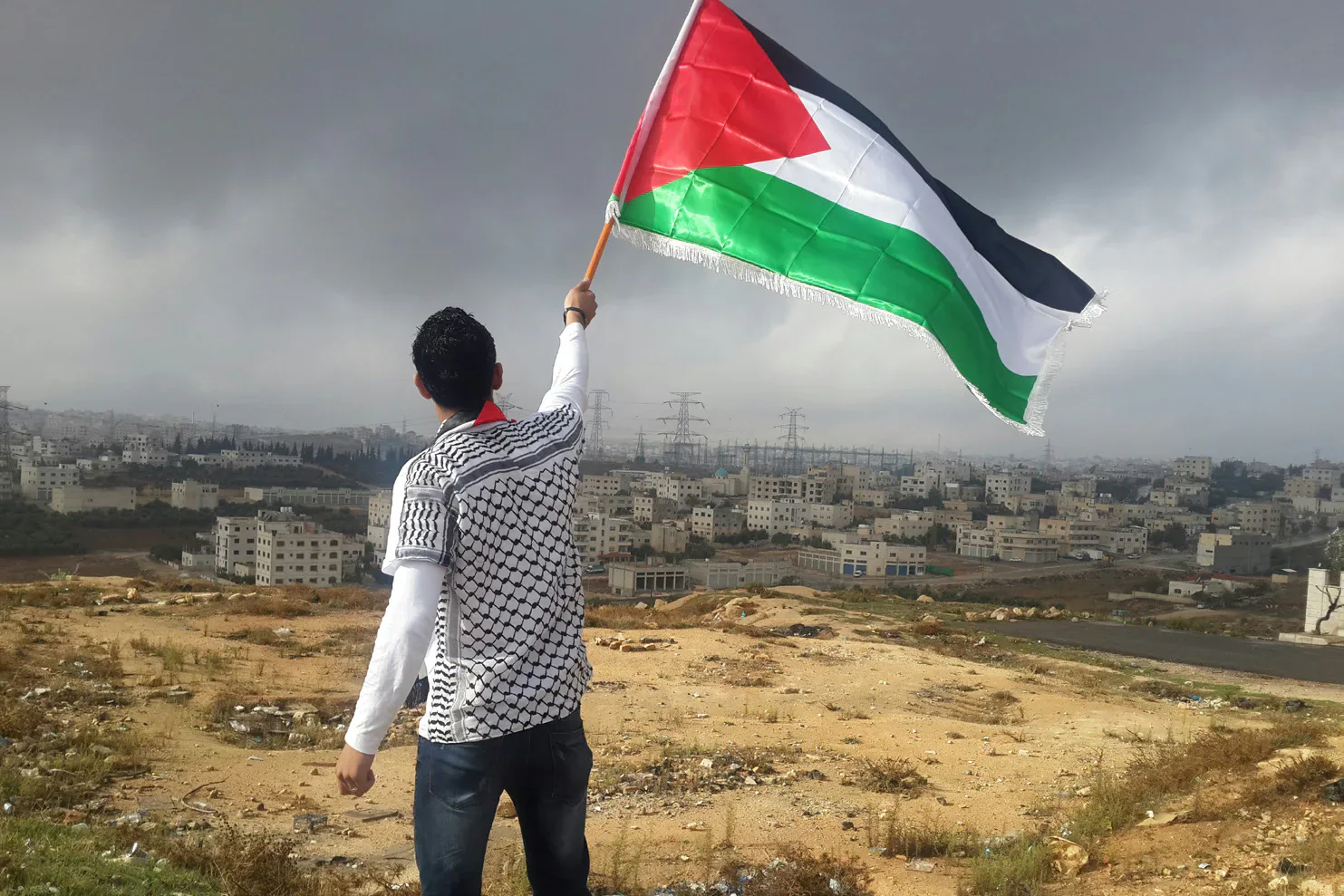
Have you ever heard the saying “actions speak louder than words”? It’s a principle taught to children: a verbal apology isn’t enough. You must show sincerity through changed behaviour to be truly sorry.
This is precisely what the many nations that have recognised Palestine in the UN have failed to understand. Instead, they offer what amounts to a half-hearted apology for Palestine’s destruction with a simple declaration: “Palestine is a state.” The UK, India and Canada have all agreed in the UN that there is a recognisable Palestinian state. Yet they continue to, whether directly or indirectly, contribute to the IDF, enabling the violent forced displacement of Palestinians.
What,then, is the purpose of recognising a state whilst funding its destruction? Is it to win votes? To resurrect the long-dead notion of a two-state solution?
The recognition of Palestine is meaningless coming from countries that clearly don’t view it as legitimate. Palestine even fails to meet most accepted definitions of statehood due to Israeli displacement. A state generally requires four qualities: a defined territory, a permanent population, a government and the capacity to enter into relations with other states.
Palestine might claim two of these qualities, but what about defined territories and a functioning government? Gaza and the West Bank have been geographically divided for over 77 years by Israel, and politically separated since 2007 after a violent conflict between Hamas (which the UK views as a terrorist organisation) and the PNA (Palestinian National Authority, which leads by the Oslo Accords over areas in the West Bank). How can Palestine have defined territories when it’s governed by two separate organisations?
Physically divided by Israel, neither are likely to yield simply because Western states have declared Palestine a state. As for the government, the UK only negotiates with the PNA. What does this reveal about the differential recognition of Palestinian statehood in Gaza versus the West Bank?
Paul R Williams wrote in “What Makes a State? Territory” that independence-seeking groups face two options under international law: fight to obtain statehood by force, or suffer human rights violations severe enough to prompt intervention and recognition from external democratic states. “Either way, the likely result is more violence.” The recognition of Palestinian statehood may worsen conditions, painting a target of contempt on Palestine for Israel. Israel’s actions show that it does not consider Palestinians as a legitimate people.
Without meaningful intervention, Israel will likely intensify attacks on Palestine out of defiance, simply because it can. The recognition of Palestine has accomplished nothing tangible for Palestinians; it offers no protection, only words. This is not enough for the people of Palestine.