
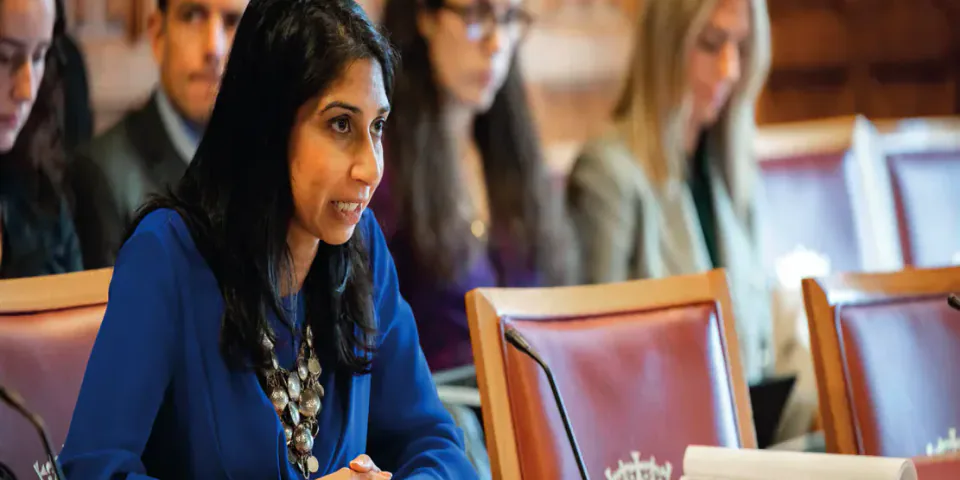
Suella Braverman has faced criticism from the United Nations refugee agency for suggesting that global leaders have refrained from making comprehensive changes to human rights legislation due to concerns about being labelled “racist or illiberal.”
The United Kingdom’s government is currently grappling with significant criticism and controversy surrounding its proposed alterations to the Refugee Convention.
This contentious issue has raised concerns among various advocacy groups and political figures, who are closely monitoring this unfolding debate on matters related to human rights, discrimination, and international diplomacy.
The genesis of this controversy lies in a recent address by Suella Braverman, the UK’s Home Secretary. In her speech, Braverman articulated the government’s intention to reevaluate the nation’s commitment to the United Nations High Commissioner for Refugees (UNHCR).
This announcement has set off a vigorous debate within the hallowed halls of Parliament and beyond.
Students have taken a keen interest in this issue due to its potential ramifications for global refugee protection. The UNHCR plays a pivotal role in providing support to refugees and advocating for their rights on a global scale. Consequently, any shift in the UK’s stance is viewed as a matter of paramount international concern.
Critics contend that the proposed changes could result in discrimination, particularly affecting LGBTQ+ refugees. As reported by The Independent, numerous charitable organizations and advocacy groups have voiced their apprehensions, suggesting that the UK’s commitment to safeguarding the rights of LGBTQ+ asylum seekers may be imperilled.
The Guardian’s updates on this matter have illuminated the divisive nature of the debate within the realm of UK politics.
While some argue that the government’s stance is aimed at more effectively managing immigration, others voice concerns about the potential for human rights violations.
The controversy around Braverman’s statement underscores the critical importance of young individuals participating in political discourse and gaining insight into the intricacies of international relations.
Students, as global citizens, are urged to consider the diverse viewpoints on this issue and its implications for refugees and asylum seekers.
In the wake of this controversy, it remains to be seen how Suella Braverman’s comments will impact international discussions on human rights reform.
The next steps may involve further clarifications from the UK government and continued dialogue with global leaders and organizations to address concerns raised by the United Nations refugee agency.
The outcome will be closely watched as the debate on human rights and global reform continues.