
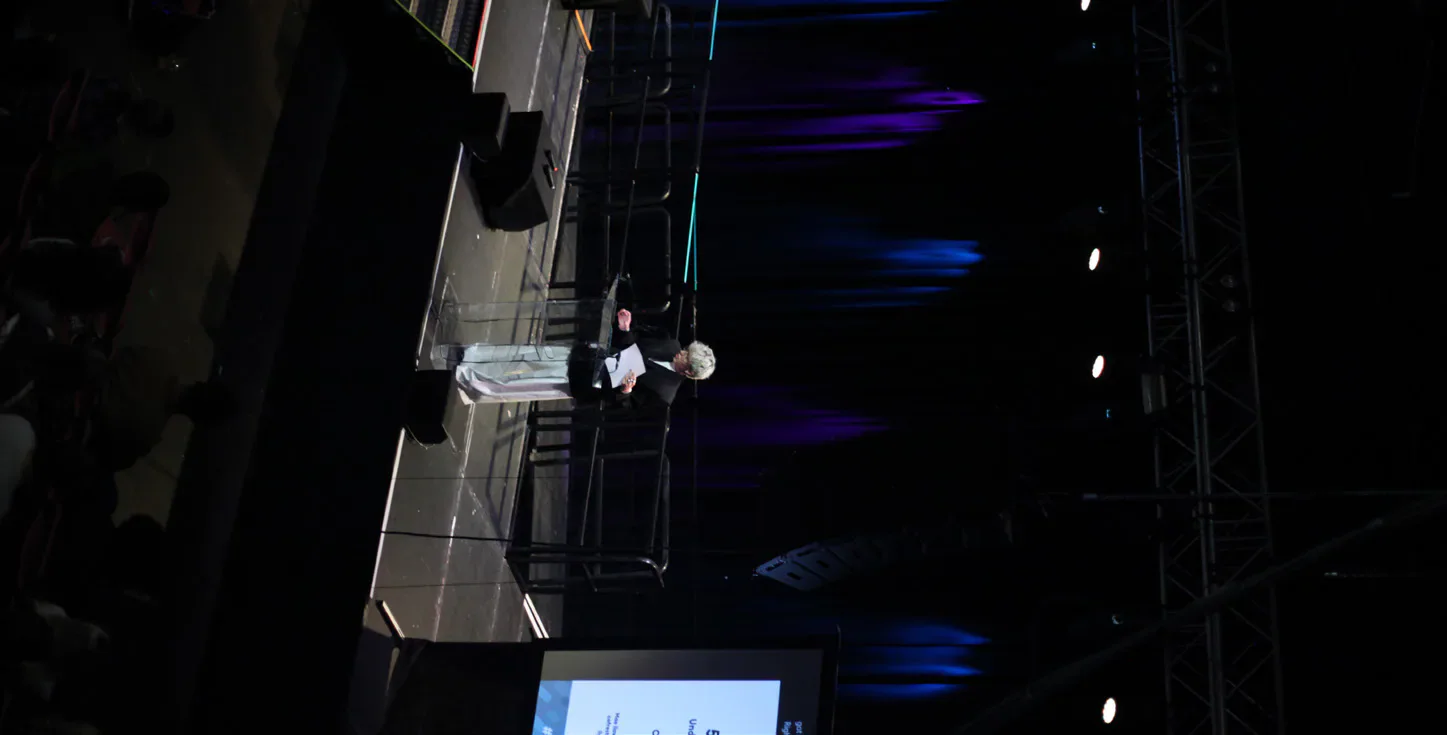
The annual event that sees students vote on important motions and actions of the student union took place on the 20th of November. Students gathered in their hundreds in the great hall to give their say on the Union’s affiliations, vote for or against four submitted motions, and get the lowdown on the Student’s Union’s finances as the union’s CEO opened the books.
The 2025 edition commenced with a rundown of the expected behaviour of the evening’s meeting, as well as vote for an acceptance of the minutes of the meeting from the previous year, merely tasks of necessary admin before inevitable debate.
SU president, Maria Pollard, kicked off the meeting with a look at the thriving engagement of the SU offers. With a 21% increase in voter engagement in the spring elections, 25,000 students expecting to engage with the SU and more than 114,000 people expected to attend the SU’s Wednesday club night, YOLO, Cardiff’s SU seems to have earnt its place as in the top 2 student union for 4 years on the trot. From an engagement point of view at least, Cardiff’s SU appears to be doing well.
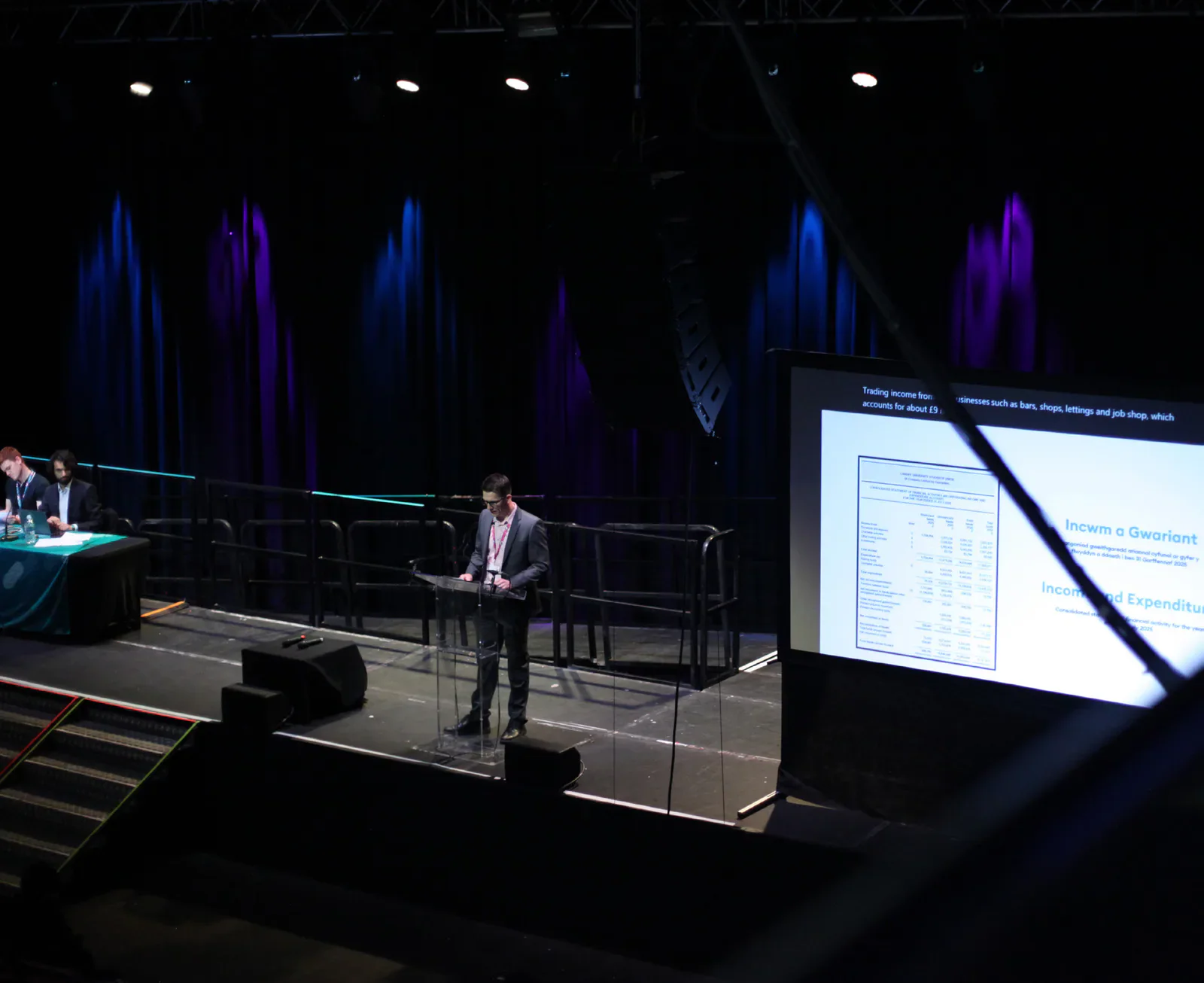
The meeting then turned to logistics, welcoming the Student Unions CEO, Daniel Palmer to the stage. Palmer informed students that their SU is in a good financial state, noting increased income and a reduction in debt.
The AGM offers a look behind the books to be transparent with students on where funds are acquired and distributed across their student union. The 2025 edition of this practice saw, as Daniel announced, a fair improvement on 2024 figures, with income rising from £12.9 million to just over £14 million. This has enabled more spending, with a total spend of £13.1 million instead of the previous £12.8 million in the preceding year.
Palmer told the audience of students that the expenses had been used to finance much needed infrastructure projects such as installation of a second passenger lift, commencing work on replacing the building’s roof and a new look to the food court area.
More important news from the AGM’s financial report presented that the SU had significantly reduced its debt using an interest free loan from Cardiff University. This meant that the discounted debt held by the Union of £4,625,233 was replaced on the balance sheet with a much lesser concessionary loan liability to Cardiff University of £3,004,000. Loan repayments will begin in August 2026, with payments being made across 12 years.
Moving on from the integral statistics that define the SU’s spending, the meeting put the affiliations of the Students Union to the vote of its attending audience. First up was BUCS, the national governing body of university sport, who unsurprisingly retained their affiliation to the SU with a landslide vote. On a more unexpected note, after a rebate from two speakers, students voted narrowly following a confirming vote count to end its affiliation with the NUS. The NUS is an organisation which represents UK students by campaigning for issues like free and lifelong education, fighting for student rights, and providing support through its member unions.
At least this is according to them, Cardiff students weren’t quite convinced with one opposing speaker proclaiming: “we need to be affiliated with an organisation that does not suppress student voices... NUS ran a decolonisation campaign and then deleted it. What is the point of you, if you are not going to uplift student voices.” Another speaker also noted their response to student protests against the war in Gaza, and while elected officer Joshua Tandy suggested “We must endeavour the NUS to do better.” The arguments of the two opposing students prevailed, and after a long tense wait, the NUS and SU’s affiliation is no more.
The meeting then progressed on to open questions to its sabbatical officers. Stand outs from this part of the agenda consisted of the VP Cymraeg, Cynwal ap Myrddin calls for all Welsh accommodation blocks to help build a stronger Welsh community, as well as pledges to appoint a specialist in visa matters to help students who might be migrants or asylum seekers.
Maria Polard also shared her gripes with the continued timetabling issues, a sentiment she acknowledged is shared amongst all students. She admitted the handling had been “totally unacceptable”, and that it has affected student’s prospects at gaining part-time work due to their lack of knowledge surrounding their availability. She also noted the problems it may have caused “Neurodivergent students who need to plan and schedule for their lives”.
Maria promised the audience that “the students union has been in consistent conversation with the Cardiff university council to make sure this does not happen again.” The agenda then moved to the submitted motions section of meeting, where the top four voted proposed motions were put to the audience to accept or deny the passing of such motions.
Up first was Time to Act, the motion to protect students to protect sexual violence at the university. Becca Rumsey took to the stage surrounded by her fellow members proclaiming the universities’ ‘broken system’. She stated “the lack of mandatory consent and bystander training across the university and Students’” as contributing factors. The Time to Act team noted that “62% of students will experience sexual violence at universities in the UK”.
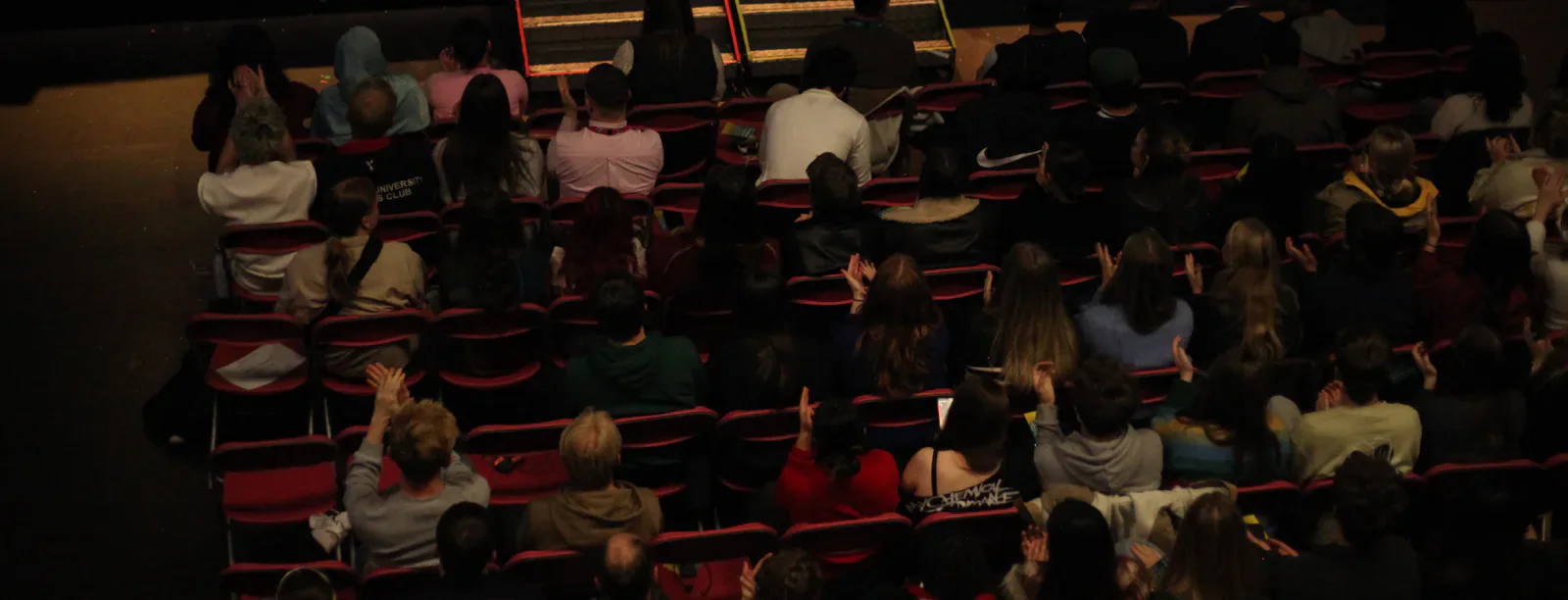
“Everyone should feel safe in their student community, and it should not become the normalised part of the student experience.” When put to the vote, the motion was passed with flying colours, with Becca and the team departing the stage with cheers of victory.
The next motion saw a similar result. My Scrubs, My Choice: Equality in Healthcare Dress Code saw students campaigning for their right to be able to dress more modestly in healthcare environments.
NHS Employers’ Uniform and Workplace Guidance states that dress codes must be justified, nondiscriminatory and sensitive to religious and cultural expression. Two healthcare students discussed the motion, Lara Al Najjar, a fourth-year medical student and Ayaat Ashi, a first-year nursing student. They stated the “NHS already has the solutions all that is missing is the will from this university.”
Students are “choosing their degree over their own comfort”. They concluded that “My Scrubs, my choice is not just a slogan, it’s a reminder that we don’t get left behind”. Ilhan Mazhar, a first-year medical student, was welcomed on stage and announced that “The current scrubs policy treats a whole group as an afterthought and makes people feel uncomfortable”. He stated that the NHS already has the solutions and that the university are behind, and that they need to implement appropriate scrubs in schools if it’s already offered by NHS employers nationally. He states that “we don’t need to hear anymore but to hear enough” from the university. The motion, like the last was passed with no sign of refute, and the Students’ Union will now start to advocate for Cardiff University to provide appropriate scrubs for healthcare students.
The third motion was not met with the same unanimous thinking. The motion to campaign for, and support, pro-choice was the most debated motion of the evening. The AGM’s official pro-choice stance was adopted three years ago, with a passing of the motion needed to re-confirm the stance. The side arguing for the renewal of adopting a pro-choice stance proclaimed that “neutrality is not an option” in the debate surrounding an official stance. They retained that while abortion remains a legal right in Wales, “issues of accessibility” persist, as women continue to be plagued with a “fear of judgement and stigma”, as well as the “misinformation” that clouds the process of abortion.
The AGM members asked those who opposed the motion to raise their hands, and up went the hand of Greg Owens, who then took to the stage offering the first refute of the night. Owens noted the importance of the SU’s obligation to retaining free speech and suggested the motion “strays into an area of non-inclusivity.” He affirmed that “if the university is to achieve its vision of inclusivity it must remain neutral on contentious issues like this.”
Owens then departed the stage to jeers and boos around the Great Hall, with the pro-choice side biting back, clarifying that pro-choice stance “leaves openness for the debate”, whilst still retaining the importance of individual choice.
The next speaker, rejecting the motion, retorted “that we cannot accept ideological suppression.” The speaker departed the stage to silence after the crowd was reminded not to boo speakers.
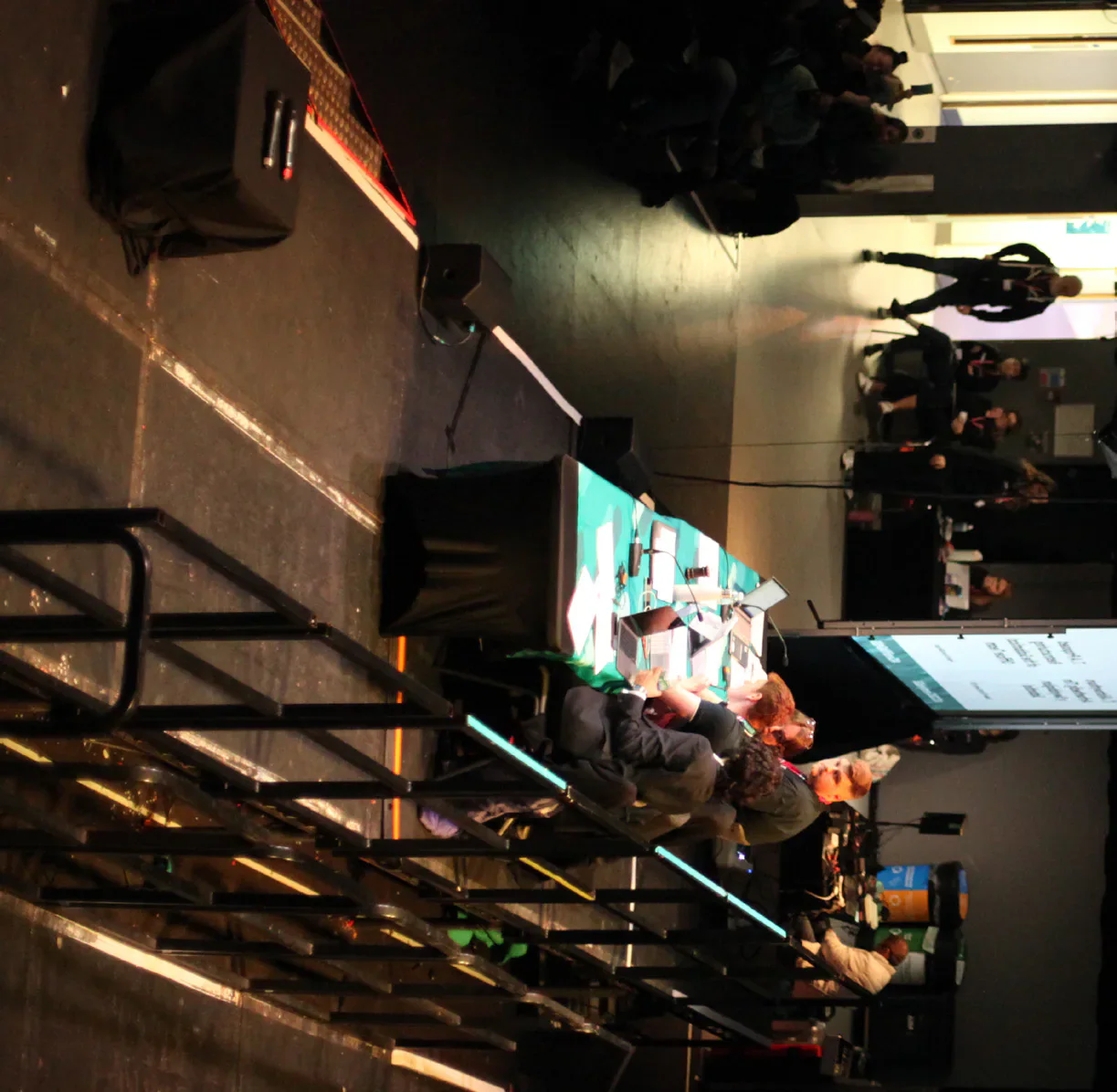
In the summary the speakers remined the audience that that as a union “we are inherently political, as a union we are allowed a stance” and that the individual choice over women and their bodies is a paramount priority. The motion went to the vote, and while not a complete sweep, the motion was passed with a heavy majority, and cheers echoed around the hall.
The meeting went into its final motion, making Cardiff a safe space for trans students. The speaker supporting the motion affirmed the importance that “trans rights are human rights”, as they called for an increased awareness of the struggles trans people must go through to feel accepted. When put to the audience, a sole member offered a rebate, taking to the stage he went on a bizarre rhetoric surrounding a potential moment of PTSD related to a family member, and how a right to fear surrounding trans people should not necessarily be shunned. The crowd was struck to silence and the speaker slowly walked of the stage, and what looked to be out of the hall.
When put the vote, like the first two motions, a landslide passing vote prevailed, and an emotive audience raised to a standing ovation to cap off the 2025 edition of the AGM. Overall, we saw a shock detachment from NUS proving the importance to of organisations getting it right when it comes to responding to protests, and how even not picking a side can have great repercussions.
The motions while undoubtably worth while causes, were obvious in their result, and with a look back to last year’s AGM, and its passing of a similar campaign against sexual violence, it puts into question how much progress can truly be made on issues that may always have their perpetrators and opposers.
Only time, and statistical and visceral examples will prove to what extent social issues like those passed this year will see progress, and whether similar or even the exact same motions will be selected as the final four submissions in AGM 2026.