
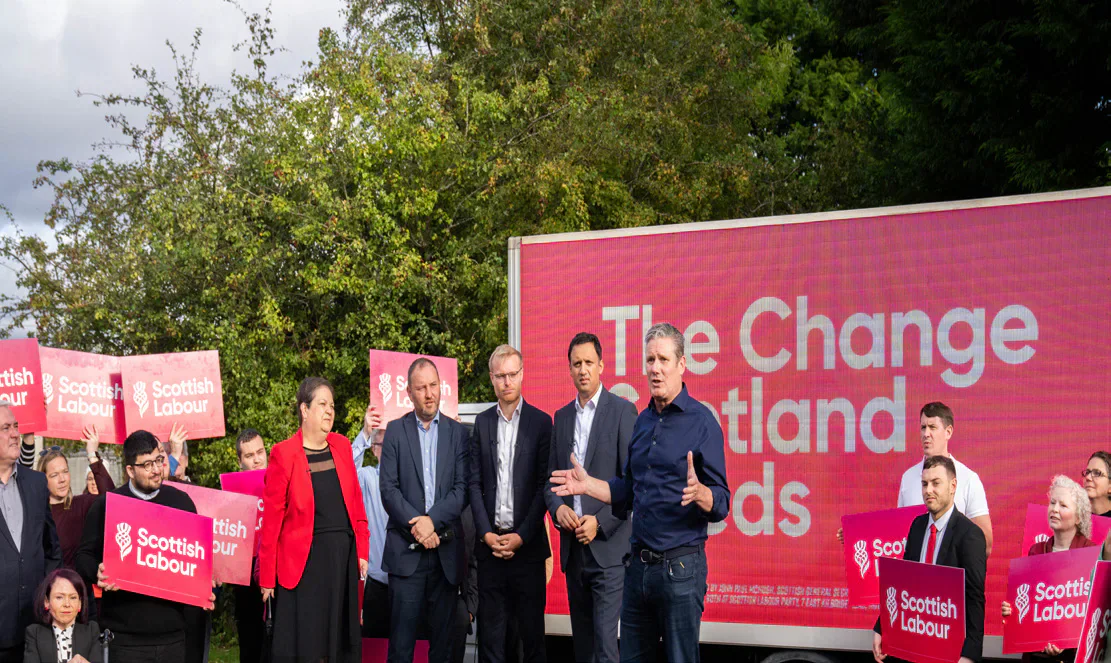
Earlier this month, voters in the Scottish constituency of ‘Rutherglen and Hamilton West’ headed to the polls to vote in a highly anticipated and contentious Westminster byelection.
Political pundits looked forward to this as it set the record on how Scottish voters feel about the main political parties in the run-up to the next general election, which is anticipated to be held in 2024.
The result was a huge win for Labour, who took the seat from the SNP with a 20.4% swing. In 2019, the SNP won the seat with 44.2% of votes, but in this by-election, it achieved just 27.6%. This is certainly a boost for Keir Starmer whose party this time received 58.6% of votes, up by 24.1% from 2019.
Meanwhile, the Conservative candidate achieved just 3.9% of votes and lost his deposit. The by-election was triggered after the seat’s previous MP, Margaret Ferrier of the Scottish National Party, was suspended from the Commons for breaching COVID-19 lockdown rules in September 2020 when she travelled by train after testing positive for the virus. In the UK, constituents of a suspended MP can open a recall petition, in which they demand their MP to resign, and a byelection to be called. To be successful, the petition needs the support of ten percent of constituents. In this case, that number was 8,113 and was exceeded when the petition received 11,896 signatures and a by-election was set for 5th October.
Not only was this the first by-election following a successful recall petition in Scotland, but it’s also the first time Scotland’s First Minister Hamza Yousaf faced the electorate after succeeding Nicola Sturgeon as SNP Leader in March 2023. In the run-up to the by-election, Yousaf was anxious to keep this seat, in the face of fierce opposition from Keir Starmer’s Labour Party who have been creeping up in Scottish polls.
In September, a YouGov national poll placed the SNP 11 points ahead of Labour, a staunch difference from their 24-point lead recorded four months earlier in May.
Furthermore, the seat has switched between the SNP and Labour at the last four general elections, with Labour winning the seat in 2010 and 2017 until the SNP swiped it back in 2015 and 2019. This means it wasn’t absurd to anticipate a Labour win in the seat.
The UK’s top pollster, Sir John Curtice predicted that Labour “ought to win relatively comfortably” given how the party has progressed in the polls. He was correct, which means that the Labour Party have doubled their number of Scottish MPs in Westminster. Until now, they had only one MP from Scotland, in Edinburgh South, following their wipe-out in 2015. The result comes just in time for the Labour Party’s annual conference, which is taking place in Liverpool. However, this jubilant party mustn’t act complacent. Later this month, two further byelections are set take place in Tory heartlands, and it’s likely Keir has his eye on them.