
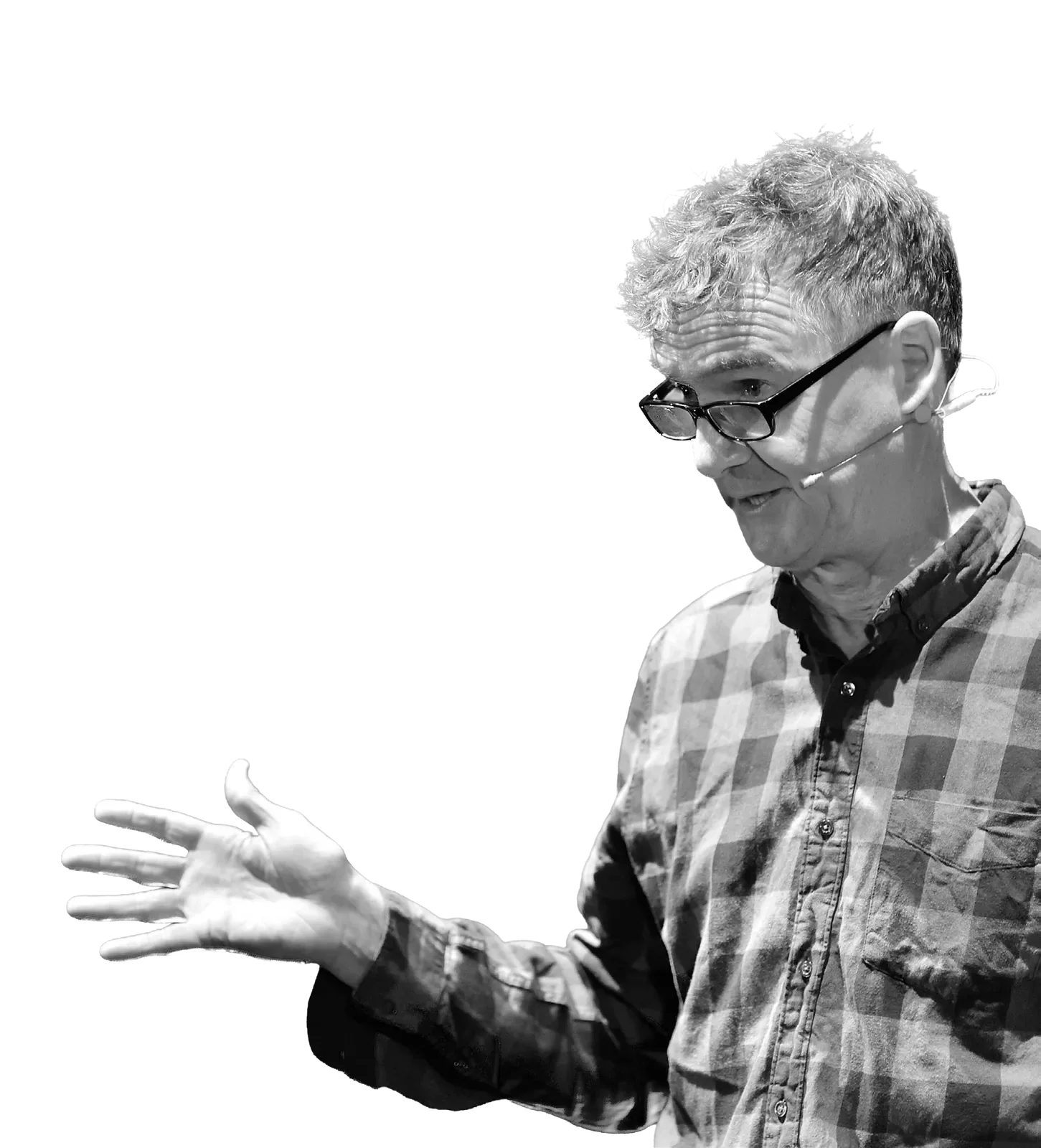
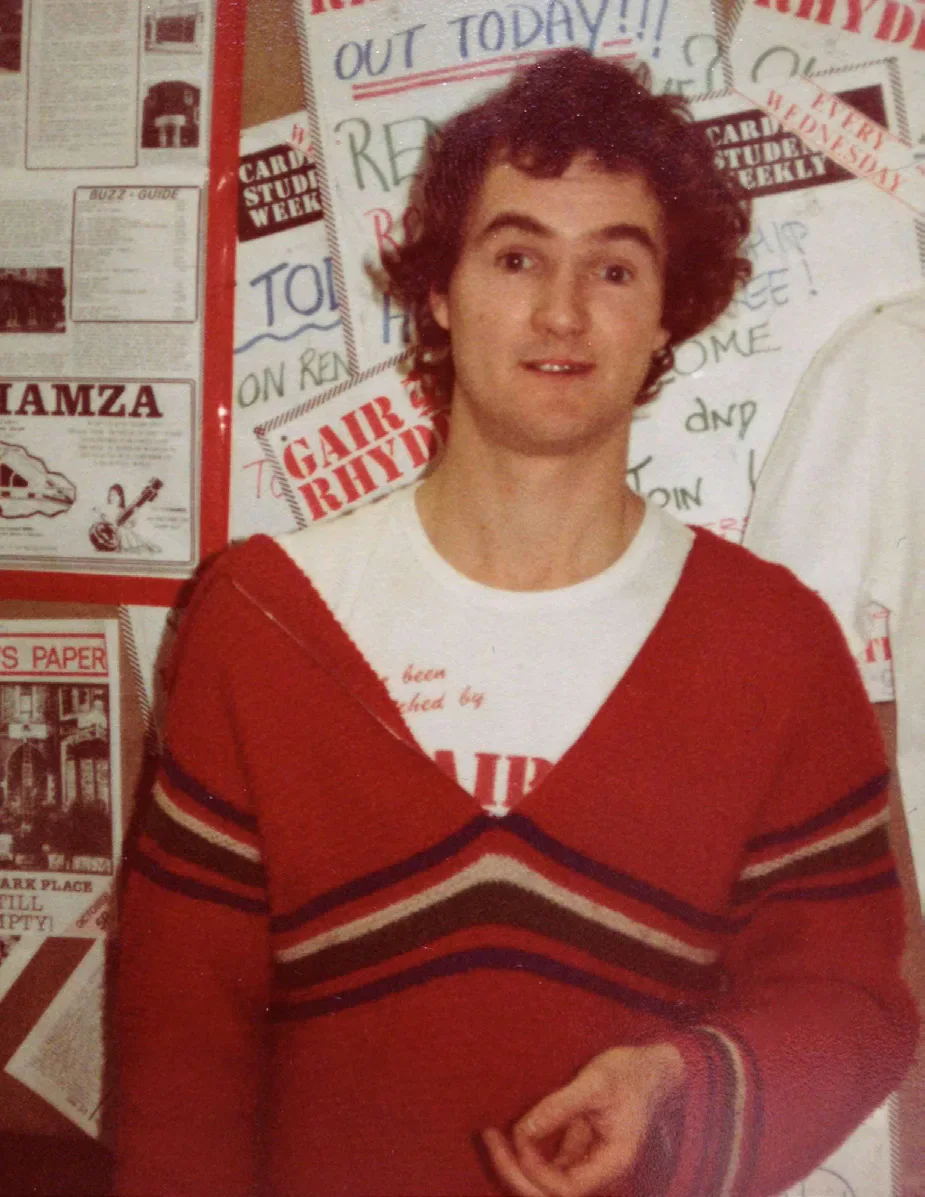
Welsh investigative journalist Meirion Jones was the first full-time editor of Gair Rhydd, back when it was a sabbatical role in Cardiff University Students’ Union which ran from 1980–1996. The former Gair Rhydd editor has spent decades holding institutions to account, moving from university corridors to national newsrooms. Gair Rhydd’s Jones is an award-winning investigative reporter, whose career began in Cardiff’s student newsroom. Gair Rhydd and Jones reflect on the stories that catapulted his career and what he believes today’s young journalists must do to build a strong portfolio to break into the industry.
Looking back, what first pushed you towards investigative journalism, and was there a particular moment early in your career that confirmed it was the right path? And can you share with Gair Rhydd some of the highlights of your career after leaving university?
Meirion shared the opportunity and the power that comes with being a part of student media and its ability to truly prepare you for the industry. “Well, I mean, I really loved my time on Gair Rhydd because it allowed me to make mistakes without huge penalties.” Jones said that moving into his career of investigative journalism was no easy feat, with him working at a computer magazine, saying that “there were no jobs at that time in journalism. It was a very, very tough time, as it is at the moment, and the only jobs you could get were on the new computer.” Jones moved on to New Scientist, where he built up a niche, a specialism, which finally led him to his long-lasting job at BBC before the Bureau of Investigative Journalism. Jones shared that early in his career, he found building networks and contacts was key to him finding success: “If you’re the person in the newsroom who knows most about it, you’re the expert, and you gradually develop these expertise areas which allow you then to be the first person people will go to if a story comes up in that area. That then allows you also to go deeper, spend time on it, and create successful investigations and stories that leads to new and exciting opportunities you never thought you would take.”
Did working at Gair Rhydd shape your approach to investigative journalism later in your career? And do you remember a particular story or edition from your editorship that still stands out today?
“Oh, yeah, yeah”. Jones shared that when he was successfully elected to be sabbatical editor of Gair Rhydd he made the decision to create a bi-weekly paper. He suggested that the story that sticks with him the most is the story of the “ultimate bad landlord”. He told Gair Rhydd that in his editorialship a story came up where there was a landlord who wanted the tenants out so bad he took a “portable electric ring and he put a small bottle of camping gas on the top of the ring, turned it on and then left the house. Now I think he thought that there would be a smaller bang than there was, but it blew the roof off the house. It blew all the ceilings in. The police turned up and, obviously, they searched the premises to see if anyone had died and they also searched the garage out the back. They found the garage was full of stolen goods that the landlord was hiding. That was one of my favourite stories.” Really shows how bad landlord stories will never fail us as a student paper, no matter the time!
Your investigations have exposed powerful institutions and individuals. How do you manage the personal and professional risks that come with that? And what lessons from your investigations do you think young journalists should take with them?
“Probably don’t try to take down your employer. As with the Jimmy Savile scandal. I mean, investigative journalism is a very tough path. If you go down it, it is, you know, because a lot of the time your work will not get out there, either because of legal problems or because you can’t quite stand it up. You can put in huge numbers of hours into something, and it won’t get there.” Jones went on to say: “Despite what happened to me—you know, I was basically forced out of the BBC—I’m still a supporter of the BBC, but when they do things that are wrong, I say so. You know, I’m a critical supporter of the BBC, but I think overall it’s a fantastic institution.”
How have you managed any personal danger or physical risks?
Meirion shared that “the first time you get a legal threat, it’s really worrying. And like, I would have a young journalist working with me, really sweating it out and not sleeping because, you know, the letter from a solicitor that’s come in” but he shared that it is “almost always a scare tactic, but it can occupy a vast amount of your time”. He went on to offer further advice: “Obviously, it becomes more serious the more senior you get, but if you do go in for investigative journalism, you’ve got to be aware and you’ve also got to be really sharp on the law.” Jones shared that he probably gets legal threats weekly at the Bureau of Investigative Journalism and a lot over the last few years of his time at the BBC’s Newsnight, but it is how you deal with them that sets you apart from the rest.
With so much disinformation circulating today, what methods do you rely on to verify sources and evidence? What advice would you give student reporters looking to carry out meaningful investigations on campus?
“So, the good thing about that is that when I joined the Bureau, we were absolutely the strongest in Britain, on both fact checking and right to reply. So, surprisingly, a lot of the national papers are not that good on either of those... So, very often, a long article might have 500 fact checkpoints on it. On every name, every fact there would be a footnote with what the source was. Also, really good media lawyers can make the changes, and they make it legally safer. But to an ordinary reader, it’s a stronger story”. Jones understands this is not as readily available to student journalists, but with every opportunity to work on media law or any similar training, he suggests taking it. He shared that as a journalist you never want to go over the line, but you can be just sat on it. “You’re very unlikely to get sued for libel as a student paper, so, you know, it’s much better to make mistakes at that level than later on, you know?”
If you were starting out now, entering journalism in 2025, is there anything that you would do differently?
“No. ‘No’ in the sense that I just had to take the path that was open to me. There’s no point sitting there hoping for the best possible thing to come along. The only way you ever make it in journalism is by taking what’s available and then working from there, and then, sure, you can have a plan. Find whatever route you can to get in and then you move towards what you want. Also, what you want to do will change. Journalism is a very ‘go get them’ career—you know, go and be a bank manager or something if you want things to just happen. But no, you won’t get anywhere by just sitting there.” As our conversation ended, it became clear that Meirion Jones’ career so far has been defined by more than merely exciting investigations, but by a belief that true journalism still matters. For Gair Rhydd, it’s a reminder of our responsibility and our opportunities that we must all take advantage of at each turn.