
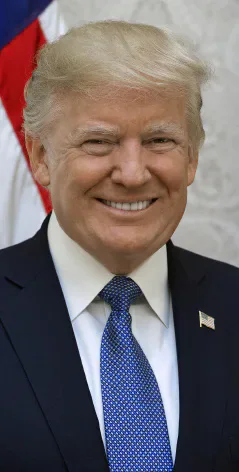
The fallout from The Telegraph’s exposé of BBC’s Panorama, resulting in a Trump lawsuit and the resignation of Tim Davie and Deborah Turness, poses uncomfortable questions. Is bias intrinsic, and has the competition between news sources descended into political feuds? The Telegraph’s article centred around Michael Prescott’s memo, which outlined that the BBC’s Panorama documentary titled had edited parts of Trump’s speech; to give the impression he had explicitly encouraged the Capitol Hill riot of January 2021.
The exposé of the editing blunder resulted in major backlash: Trump threatened the BBC with a $1bn lawsuit, Boris Johnson labelled it as “a disgrace”, and Tim Davie (BBC Director general) and Deborah Turness (BBC Head of News) resigned on the 9th of November. Watching Panorama’s edited version of Trump’s speech alongside the original broadcasted version unequivocally confirms that the edits of Trump’s words and manipulation of footage create a distorted (or biased) impression of Trump. However, whilst I am not defending this editing blunder, it appears the force of this condemnation is politically charged.
Sensationalist headlines from right-leaning publications such as “The BBC must change before it’s too late”, as well as the depiction of the BBC as “one of the very worst sources of disinformation and distortion in news media” (The Telegraph) is a step too far. The scandal clearly signals a departure from BBC’s longstanding claim of centrality and impartiality—yet it never really was, and this merely confirms it. Therefore, is this editing mistake being blown out of proportion to fuel the “war on the BBC”?
What do the words really mean in an inherently political world of journalism? To me, they should be taken with a pinch of salt. Whilst journalists strive for neutrality and objectivity, the process of journalism is a human process.
In the words of David S Broder: “Journalism is a partial, hasty, incomplete, inevitably somewhat flawed and inaccurate rendering of some of the things we’ve heard about in the past 24 hours.” The BBC has made mistakes, but so have numerous other news outlets. In August, The Telegraph published a front-page story relying on incorrect statistics that distorted the number of migrants living in London. In addition, following their exposé, Trump thanked The Telegraph on X for “exposing these corrupt journalists”, and The Telegraph responded by publishing an article highlighting his praise.
For me, this is where the real concern lies. The relationship between politicians and the press should be uncomfortable, where journalists scrutinise and inspect political figures. This back-patting between Trump and The Telegraph feels undignified, even troubling.
It raises the question of whether competition between news outlets has deteriorated into a childish tit-for-tat, one that prioritises point-scoring over integrity. Although I question the motivation of condemning the BBC, I believe the BBC should be criticised for their denial of bias. In her resignation speech, Deborah Turness stated “I want to be absolutely clear—recent allegations that BBC News is institutionally biased are wrong”.
Transparency and accepting accountability would serve the BBC far better than insistence on purity. Bias exists everywhere in journalism, and no news outlet is truly impartial. Transparency on bias is key in a moment when trust in the media is already fractured. Recognising bias and political agendas of news organisations, as well as reading widely, are essential to interpreting the news.